





What's Happening?
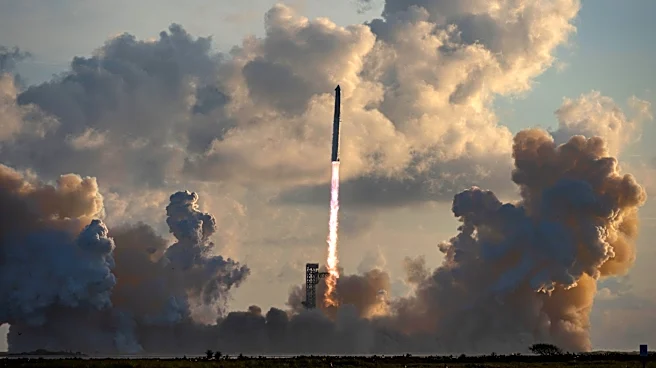
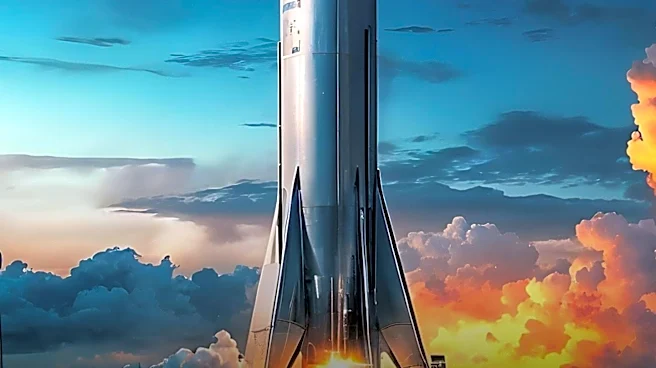
SpaceX is preparing for its most ambitious Starship test flight to date, aiming to achieve full reusability of both the Starship upper stage and the Super Heavy booster. The flight, potentially launching as early as November 13, 2026, will attempt to launch Starship into
Earth orbit, deploy 26 Starlink V3 satellites, and then land both stages back at Starbase, Texas. The Super Heavy booster is designed to return to the launch pad for a safe landing, a maneuver successfully demonstrated three times previously. For the first time, the Starship upper stage is also planned to return to Starbase for a soft landing on a separate pad. This mission follows the 14th flight in September, which experienced engine problems and did not complete a full orbit, despite reaching an orbital trajectory. If successful, this 15th flight would mark the first fully orbital flight for Starship and a significant step towards SpaceX's goal of dramatically lowering space launch costs through rapid reusability.
Why It's Important?
The successful recovery and reuse of both Starship stages would represent a monumental leap in space technology, potentially revolutionizing space travel and access. Full reusability is central to SpaceX's vision of significantly reducing the cost of space launches, making missions to the Moon, Mars, and beyond more economically viable. This would have profound implications for various sectors, including satellite deployment, space tourism, and deep-space exploration. Lower launch costs could accelerate the expansion of satellite constellations like Starlink, improving global internet access. It could also enable more frequent and ambitious scientific missions, fostering innovation and discovery. The ability to rapidly reuse launch vehicles would also increase launch cadence, allowing for quicker response times for both commercial and governmental space needs. This development could solidify the U.S.'s leadership in space exploration and commercial space endeavors, attracting further investment and talent to the industry.
What's Next?
If this test flight is successful, SpaceX will likely proceed with further testing and refinement of the Starship system, moving closer to operational readiness for both Starlink deployments and NASA's Artemis moon missions. The company will focus on demonstrating the speed and efficiency of refurbishment and reuse, which is critical for achieving the economic benefits of full reusability. Future steps will involve increasing the frequency of Starship launches and expanding its payload capacity. The success of this mission could also accelerate the development of other large-scale space infrastructure projects, as the cost barrier to space access is lowered. Conversely, any setbacks or failures in this ambitious test could lead to delays in the Starship program and require further design modifications and testing, impacting SpaceX's timelines for its various space initiatives and potentially affecting its partnerships with entities like NASA.
Beyond the Headlines
The pursuit of full reusability with Starship carries broader implications beyond just cost reduction. It represents a paradigm shift in how humanity approaches space, moving from expendable rockets to a more sustainable and accessible model. This could foster a new era of space industrialization, with the potential for in-space manufacturing, resource utilization, and even large-scale space habitats becoming more feasible. However, the increased frequency of launches and the sheer size of Starship also raise environmental concerns, such as atmospheric impacts and space debris. The sonic booms generated during Starship's return to Earth, as noted by SpaceX, highlight potential noise pollution issues for communities near launch and landing sites. Furthermore, the dominance of a single private company in developing such a transformative technology could lead to questions about market competition and regulatory oversight in the rapidly evolving space industry.