
What's Happening?
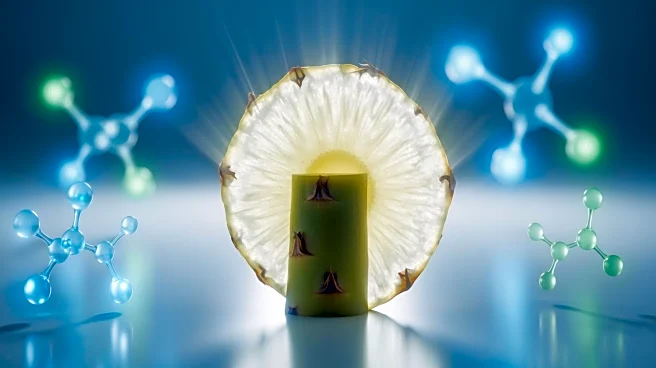
Recent research has focused on the potential of bromelain, a proteolytic enzyme derived from pineapples, to interact with the coronavirus spike protein. The spike protein is crucial for the virus's ability
to attach to and enter human cells, primarily through ACE2 receptors found in various organs. Bromelain's ability to cleave peptide bonds in proteins suggests it might alter the spike protein's structure, potentially reducing its capacity to bind to these receptors. This interaction is not highly specific but rather structural, affecting the protein's conformation. While bromelain's effects have been observed in laboratory settings, large-scale human trials are still needed to confirm its clinical efficacy. The enzyme is also known for its anti-inflammatory and anti-edematous properties, which have been explored in various medical contexts.
Why It's Important?
The exploration of bromelain's interaction with the spike protein is significant as it could lead to alternative strategies for mitigating COVID-19's impact. If proven effective, bromelain could offer a low-cost, widely available option for reducing viral entry into cells, complementing existing treatments and vaccines. This research highlights the potential of repurposing natural compounds in the fight against viral infections, which could be particularly beneficial in resource-limited settings. Additionally, understanding bromelain's broader biological effects could inform its use in managing inflammation and supporting recovery from viral infections.
What's Next?
Further research is needed to establish bromelain's efficacy in human trials. Scientists are likely to conduct more comprehensive studies to determine optimal dosages and long-term effects. If successful, bromelain could be integrated into treatment protocols for COVID-19 and other viral infections. The scientific community may also explore its potential in combination with other compounds to enhance its effectiveness. Public health policies might consider incorporating such natural compounds into broader pandemic response strategies, especially in areas with limited access to conventional treatments.
Beyond the Headlines
The investigation into bromelain's effects on the spike protein underscores a broader trend of exploring natural compounds for medical applications. This approach reflects a growing interest in integrative medicine, which combines conventional and alternative therapies. The potential success of bromelain could encourage further research into other natural enzymes and compounds, potentially leading to new therapeutic avenues. Additionally, this research highlights the importance of understanding the complex interactions between viral proteins and host cell receptors, which could inform future antiviral drug development.