






What's Happening?
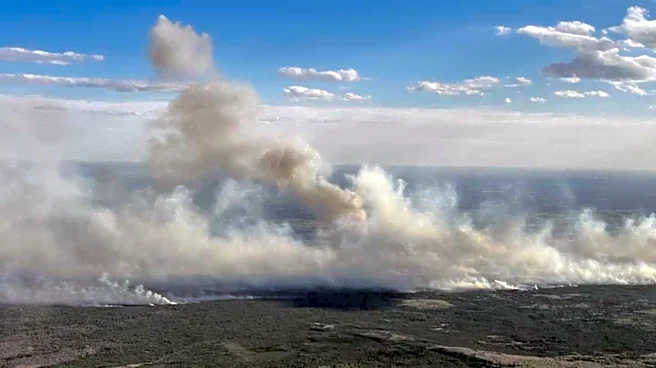
Two wildfires are currently active in Michigan's Upper Peninsula, prompting ongoing firefighting efforts by the Michigan Department of Natural Resources (DNR). The Ridge Fire, located approximately 10 miles northwest of Marquette, north of the Dead River
Basin, has burned about 256 acres. The Craig Lake Fire, situated north of Craig Lake State Park, has affected around 30 acres. Both fires were initially detected on Friday by a DNR pilot. The Ridge Fire has necessitated three evacuations, while no evacuations have been ordered for the Craig Lake Fire. Firefighting crews are actively working to contain these blazes in remote and challenging terrain. The exact cause of both wildfires is presently under investigation.
Why It's Important?
The ongoing wildfires in Michigan's Upper Peninsula highlight the persistent threat of wildland fires to natural resources and communities, even in regions not typically associated with large-scale blazes. The Ridge Fire's size and the resulting evacuations underscore the immediate danger to residents and the significant resources required for suppression. The remote and rugged terrain where these fires are burning complicates firefighting efforts, increasing the risk to personnel and potentially prolonging containment. The investigation into the cause of these fires is crucial for understanding ignition patterns and implementing preventative measures. Furthermore, the incident emphasizes the critical role of aerial surveillance, as a DNR pilot was instrumental in the early detection of both fires, allowing for a more rapid response.
What's Next?
Firefighting crews from the Michigan Department of Natural Resources will continue their efforts to contain and extinguish both the Ridge Fire and the Craig Lake Fire. Their immediate focus will be on establishing control lines and mitigating further spread, particularly given the challenging terrain. The investigation into the cause of both fires will proceed, which could lead to insights into fire prevention strategies or potential accountability. Residents in areas adjacent to the fires will remain on alert, especially those near the Ridge Fire where evacuations have already occurred. The DNR will likely provide regular updates on containment progress and any changes to evacuation orders. Depending on weather conditions, the intensity and spread of the fires could fluctuate, influencing the duration and complexity of the response.
Beyond the Headlines
The Michigan wildfires, while localized, contribute to a broader national conversation about increasing wildfire frequency and intensity, even in areas historically less prone to such events. This situation could prompt a re-evaluation of fire management strategies and resource allocation within Michigan, potentially leading to increased investment in early detection systems, fire breaks, and community preparedness programs. The remote nature of these fires also brings into focus the challenges of accessing and combating blazes in wilderness areas, which can have long-term ecological impacts on forest health, wildlife habitats, and water quality. Furthermore, the incident serves as a reminder of the importance of public awareness regarding fire safety and the potential for human activity to spark such events, especially as climate patterns shift.