

What's Happening?
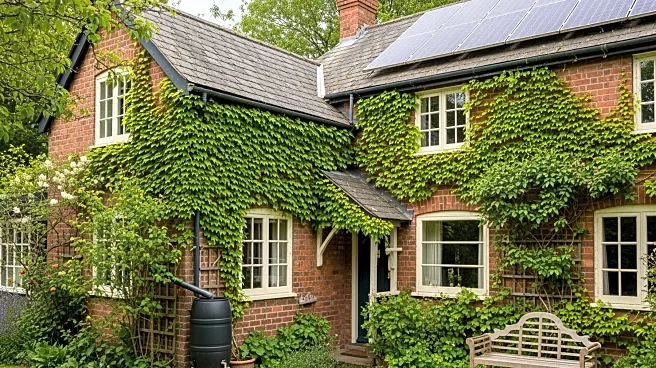
A historic 19th-century workers' cottage in Newtown, Sydney, has been transformed into a self-sufficient home by Laura Ryan. The project, known as The Impossible House, integrates rainwater harvesting, greywater treatment, solar power with battery storage,
and a sewer-free incinerating toilet. The renovation preserved the historic facade while reorganizing the interior to include modern amenities like an office, terrace, and integrated kitchen. Prefabricated building techniques and material reuse were employed to minimize waste and maintain the building's historical character. Despite challenges such as heritage conservation restrictions and technical limitations, the project aims to serve as a model for sustainable urban living.
Why It's Important?
This transformation highlights the potential for sustainable living solutions in urban environments, challenging the notion that such innovations are only feasible in rural settings. By demonstrating the integration of self-sufficient systems in a densely populated area, the project could influence urban planning and renovation practices, encouraging more eco-friendly developments. The initiative also underscores the importance of adapting existing infrastructure to meet modern sustainability goals, potentially reducing urban reliance on external resources and promoting environmental conservation.
What's Next?
The project faced challenges, including restrictions on solar panel installations due to heritage conservation rules. However, local authorities are reviewing these restrictions, which could lead to policy changes that facilitate similar sustainable projects in conservation areas. The success of The Impossible House may inspire further innovations in urban sustainability, prompting policymakers and developers to consider more flexible regulations that support eco-friendly renovations.
Beyond the Headlines
The project not only addresses environmental sustainability but also raises questions about the balance between preserving historical architecture and implementing modern technologies. It highlights the need for a collaborative approach among architects, engineers, and policymakers to overcome regulatory and technical barriers. The initiative also emphasizes the role of individual efforts in driving broader societal changes towards sustainability.