




What's Happening?
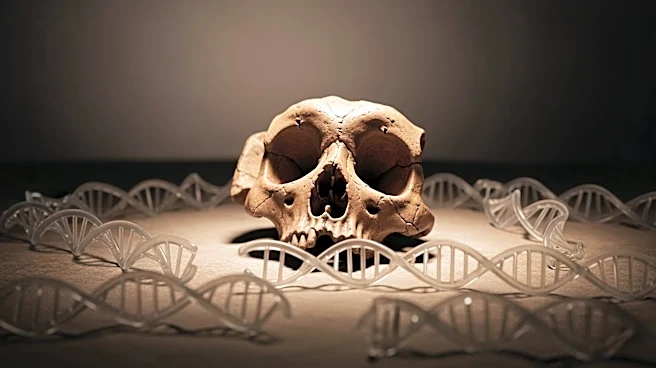
A recent study led by a Harvard University geneticist has analyzed the genomes of 16,000 ancient and modern humans from Western Eurasia, revealing significant evolutionary trends over the past 18,000 years. The research indicates an increase in traits
such as red hair and lighter skin tones, while the incidence of male pattern baldness and rheumatoid arthritis has decreased. The study utilized statistical methods to isolate signals of natural selection, identifying 479 gene mutations with 60% matching traits of modern humans. Notably, genes related to light skin color, red hair, and resistance to diseases like HIV and leprosy showed strong positive selection. The research also highlights the decline of genes associated with tuberculosis and multiple sclerosis over time, suggesting environmental changes and selective pressures influenced these trends.
Why It's Important?
This research provides valuable insights into how human traits have evolved in response to environmental and cultural changes. Understanding these evolutionary trends can inform current medical and genetic research, particularly in identifying genetic predispositions to certain diseases. The findings underscore the role of natural selection in shaping human biology, offering a deeper understanding of how historical pressures have influenced genetic traits. This knowledge could lead to advancements in personalized medicine and public health strategies by identifying populations at risk for specific conditions based on their genetic makeup.
What's Next?
The research team plans to extend their study to other regions beyond Western Eurasia, with preliminary findings already published on East Eurasians. By applying their approach more broadly, they aim to understand how different environmental and cultural factors have influenced natural selection globally. This could lead to a comprehensive map of human evolutionary trends, providing further insights into how diverse populations have adapted to their environments over millennia. Such research could also inform future studies on the impact of modern lifestyle changes on human genetics.
Beyond the Headlines
The study highlights the complex interplay between genetics and environment, emphasizing the importance of considering local factors such as diet, pathogens, and climate in understanding human evolution. This approach challenges the notion that natural selection is rare, instead suggesting that small but consistent genetic changes have occurred over time. The research also raises questions about the future of human evolution in the face of rapid technological and environmental changes, prompting discussions on how these factors might shape genetic traits in the coming centuries.