
What's Happening?
The increasing use of satellite internet by airlines, facilitated by providers like Starlink and Project Kuiper, is enhancing passenger connectivity. However, this growth in low Earth orbit satellites
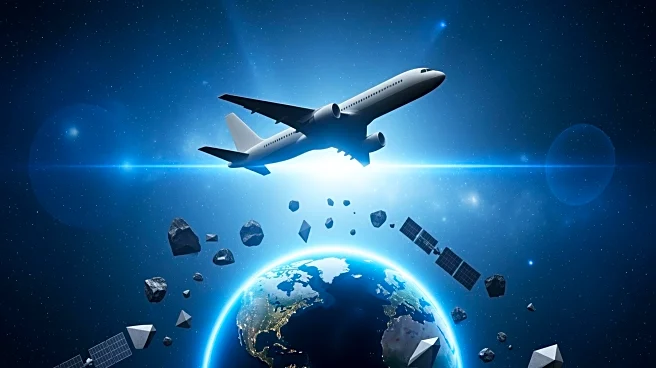
brings a significant risk: space junk. A study published in Scientific Reports highlights the danger posed by over 2,300 rocket bodies currently in orbit, which will eventually reenter the Earth's atmosphere in an uncontrolled manner. Although the probability of these debris colliding with aircraft is low, the potential consequences of such an event could be catastrophic. The study emphasizes that rocket bodies, due to their size, pose a greater threat than the satellites themselves. Additionally, smaller debris can also endanger flights, similar to the risks posed by volcanic ash to aircraft.
Why It's Important?
The potential threat of space junk to air travel underscores the need for increased awareness and preventive measures. As airlines increasingly rely on satellite technology for in-flight connectivity, the risk of debris-related incidents could impact passenger safety and operational reliability. The aviation industry, along with regulatory bodies, may need to develop strategies to mitigate these risks, ensuring that the benefits of satellite internet do not come at the cost of safety. This issue also highlights the broader challenge of managing space debris, which could have implications for other sectors reliant on satellite technology.
What's Next?
Efforts to address the risks posed by space junk may involve international collaboration to improve tracking and management of orbital debris. Regulatory agencies could implement stricter guidelines for satellite launches and end-of-life disposal to minimize the creation of new debris. Additionally, technological advancements in debris removal and collision avoidance systems could play a crucial role in safeguarding air travel. Stakeholders in the aviation and space industries may need to work together to develop comprehensive solutions to this growing problem.
Beyond the Headlines
The issue of space junk extends beyond aviation, affecting satellite operations and space exploration. As the number of satellites in orbit continues to grow, the risk of collisions increases, potentially leading to a cascade effect known as the Kessler Syndrome, where space becomes increasingly cluttered with debris. This scenario could hinder future space missions and the deployment of new satellites, impacting global communications, weather forecasting, and scientific research. Addressing space junk is thus a critical challenge for the sustainability of space activities.