






What's Happening?
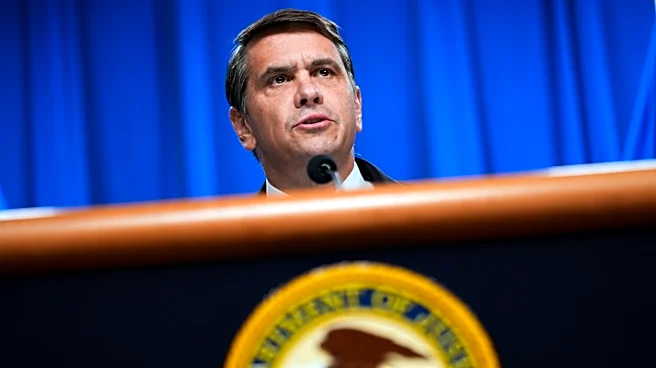
The Department of Justice (DOJ) has announced the cessation of plans for President Trump's proposed $1.776 billion anti-weaponization fund. This decision follows a temporary block by a federal judge after a lawsuit was filed by Democracy Forward and other
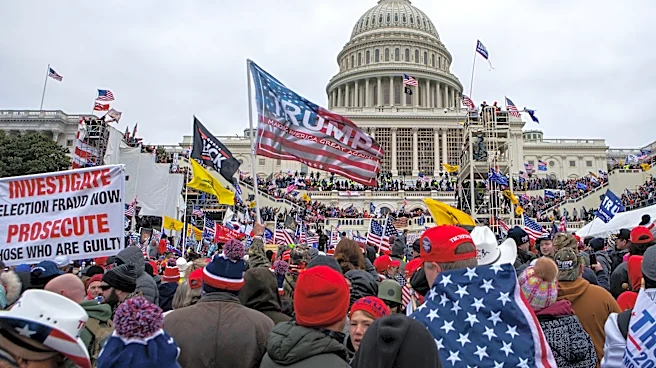
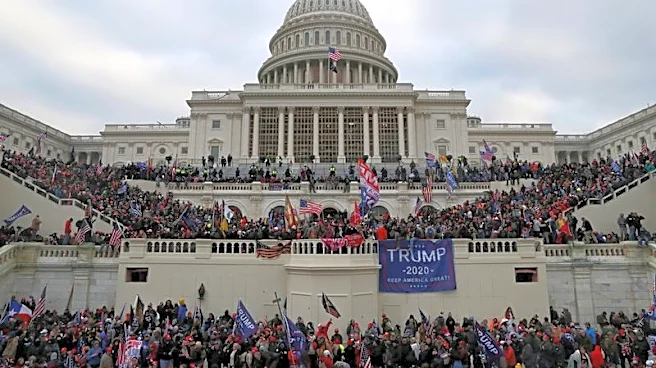
organizations. The fund, which was intended to provide financial support to individuals affected by what the administration termed 'weaponization' of government agencies, faced criticism from both Democrats and some Republicans. Critics argued that the fund could potentially be used to support individuals involved in the January 6 Capitol riots. The DOJ's decision marks a significant setback for President Trump, who has faced opposition from within his party regarding this initiative.
Why It's Important?
The halting of the anti-weaponization fund is significant as it highlights the growing division within the Republican Party regarding President Trump's policies. The fund was seen by many as a controversial move that could have redirected taxpayer money to support individuals involved in the Capitol riots, thus undermining the rule of law. The opposition from Republicans, particularly in the Senate, indicates a shift in the party's willingness to support all of Trump's initiatives. This development could impact the administration's ability to push through other legislative priorities, including those related to immigration enforcement. The decision also underscores the ongoing legal and political challenges faced by the Trump administration.
What's Next?
With the DOJ's decision to halt the fund, the Trump administration may need to reassess its strategy for addressing what it perceives as the weaponization of government agencies. The administration could face further legal challenges if it attempts to revive the fund or similar initiatives. Additionally, the internal dissent within the Republican Party may lead to more significant challenges for President Trump in implementing his policy agenda. The upcoming midterm elections could also be influenced by this development, as candidates may distance themselves from controversial policies to appeal to a broader electorate.