







What's Happening?
The Enzweiler Building Institute (EBI) in Erlanger, Kentucky, has received a USDA Rural Development Grant to launch the Rural Construction Workforce Accelerator. This initiative aims to expand access to skilled trades education and workforce development
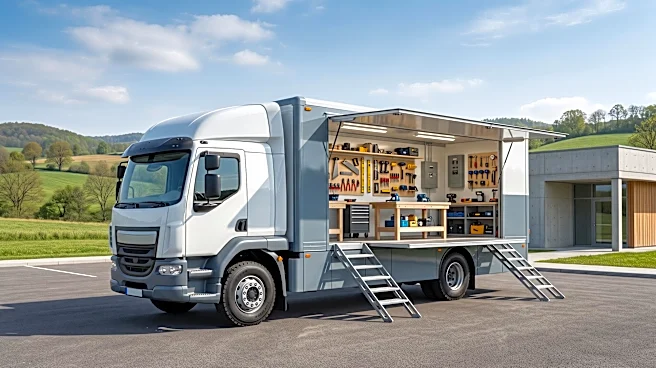
opportunities in rural Northern Kentucky, specifically in Gallatin, Grant, Owen, and Pendleton counties. The program will utilize a new Mobile Training Unit, serving as a traveling classroom and recruitment hub, to bring hands-on training and career exploration directly to underserved communities and schools. The goal is to address critical labor shortages in high-demand trades such as HVAC, electrical, plumbing, welding, and carpentry, while also providing business-capacity development workshops for small construction companies.
Why It's Important?
This initiative is crucial for strengthening the construction workforce pipeline in rural Northern Kentucky, where employers consistently face significant labor shortages. By bringing training directly to communities, EBI will reduce transportation and access barriers, making skilled trades education more accessible to high school students, adults seeking career changes, veterans, and underemployed workers. This direct approach not only helps individuals secure rewarding careers with good wages and stability but also supports the growth of small and emerging construction businesses that are vital to local economies. The program's focus on business-capacity development for small companies further ensures that the region's construction sector can thrive, meet customer demands, and take on new projects, contributing to the long-term economic health of rural areas.
What's Next?
EBI will deploy its new Mobile Training Unit to deliver skilled trades demonstrations and career awareness activities directly to local schools and community locations in the targeted rural counties. The institute will also conduct workshops for small construction companies on topics such as project management, estimating, leadership, and technology adoption. The program is expected to connect participants with career pathways, apprenticeships, licensure preparation, and employment opportunities throughout the region. The success of this model could potentially influence similar workforce development initiatives in other rural areas across the U.S., demonstrating an effective strategy for addressing skilled labor shortages and fostering economic growth in underserved communities.
Beyond the Headlines
This initiative highlights a broader national challenge: the decline of skilled trades in favor of four-year college degrees, leaving a significant gap in essential industries like construction. The USDA grant and EBI's program represent a strategic investment in vocational training, recognizing its critical role in economic development and community resilience. Beyond immediate job creation, fostering skilled trades can lead to more robust local economies, reduce reliance on external labor, and provide viable career paths for individuals who may not pursue traditional higher education. This approach also addresses equity by making quality training accessible to rural populations, potentially mitigating brain drain and empowering local communities to build and maintain their own infrastructure. It underscores a shift towards valuing diverse educational pathways and practical skills as foundational to a strong national workforce.