






What's Happening?
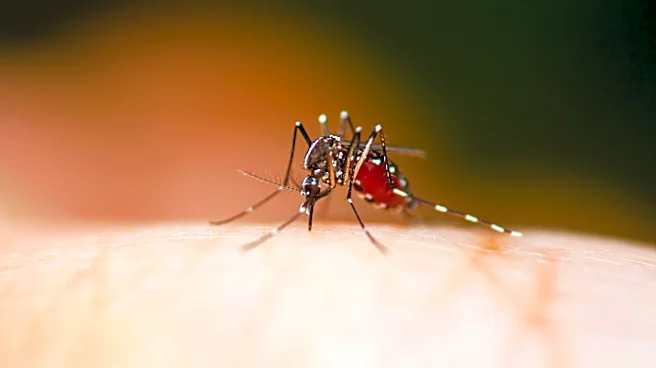
Pinellas County, Florida, is currently under a mosquito-borne illness alert following reports of locally acquired dengue fever cases across the Tampa Bay area. In response to this public health concern, Pinellas County Mosquito Control has escalated its
surveillance, inspection, and treatment activities. Residents are being directed to resources provided by Pinellas.gov/mosquito and the Florida Department of Health’s website, floridahealth.gov/dengue, for information on how to protect themselves from dengue fever. Additionally, the county is utilizing its Facebook page to share tips on preventing mosquito breeding, emphasizing community involvement in controlling mosquito populations.
Why It's Important?
The issuance of a mosquito-borne illness alert in Pinellas County signifies a direct threat to public health, as locally acquired dengue fever cases indicate that the virus is circulating within the community. Dengue fever can range from a mild illness to a severe, life-threatening condition, making its local transmission a serious concern. The increased surveillance and treatment efforts by Pinellas County Mosquito Control are crucial for mitigating the spread of the disease and protecting residents. This situation also highlights the importance of public awareness and individual actions, such as eliminating standing water, in preventing mosquito breeding and reducing the risk of infection. The economic impact could include healthcare costs for treating dengue cases and potential disruptions to local tourism if the outbreak escalates.
What's Next?
Pinellas County residents are urged to take immediate preventative measures against mosquito bites and breeding. This includes regularly checking properties for standing water, which serves as mosquito breeding grounds, and following guidelines provided by local health authorities. Pinellas County Mosquito Control will likely continue its heightened activities, which may involve increased spraying and public outreach campaigns. The Florida Department of Health will also continue to monitor the situation and provide updates and guidance. Community engagement through social media and local government channels will be vital in disseminating information and encouraging collective action to control mosquito populations and prevent further spread of dengue fever.
Beyond the Headlines
The emergence of locally acquired dengue fever cases in Pinellas County underscores the growing challenge of vector-borne diseases in the U.S., particularly in warmer climates. This situation reflects broader trends influenced by factors such as climate change, which can expand the geographical range and breeding seasons of mosquitoes, and increased global travel, which can introduce new pathogens. The response in Pinellas County highlights the critical role of integrated public health strategies, combining environmental management, vector control, and public education. It also brings to light the need for continuous investment in public health infrastructure and research to combat emerging and re-emerging infectious diseases effectively, emphasizing that local health issues can have wider implications for national health security.