






What's Happening?
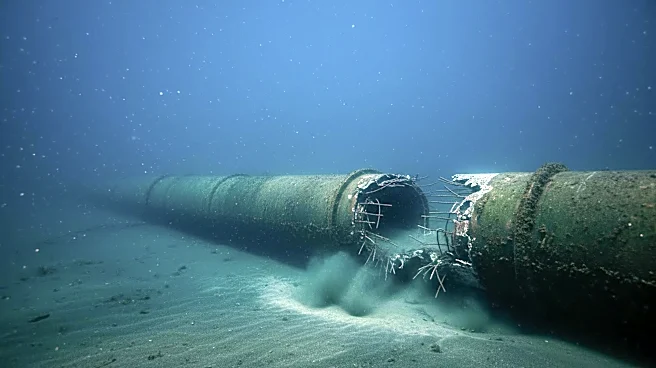
German federal prosecutors have charged a 50-year-old Ukrainian national, identified as Serhii K, in connection with explosions that destroyed the Nord Stream gas pipelines in 2022. The charges allege that Serhii K coordinated a team that used a yacht
to place explosive devices on the pipelines near Denmark's Bornholm Island. The explosions severely damaged the Nord Stream 1 and 2 pipelines, halting gas transport from Russia to Europe. The suspect, who was arrested in Italy and extradited to Germany, denies involvement, claiming he was in Ukraine at the time. Ukrainian President Volodymyr Zelenskyy has stated that it is too early to comment on the charges.
Why It's Important?
The charges against Serhii K highlight ongoing investigations into the sabotage of critical energy infrastructure, which had significant geopolitical and economic repercussions. The Nord Stream pipelines were key routes for Russian gas to Europe, and their destruction exacerbated energy supply challenges amid the Russia-Ukraine conflict. The case underscores the complexities of international law and the challenges in attributing responsibility for such acts. It also reflects broader tensions between Russia, Ukraine, and European nations, with potential implications for future energy security and diplomatic relations.
What's Next?
The legal proceedings against Serhii K will continue in Germany, with potential implications for international relations and energy security. The outcome of the trial could influence diplomatic interactions between Ukraine, Germany, and other involved nations. Additionally, the case may prompt further investigations into the security of energy infrastructure and the measures needed to prevent similar incidents. Stakeholders, including governments and energy companies, will be closely watching the developments to assess potential impacts on energy policies and international cooperation.