
What's Happening?
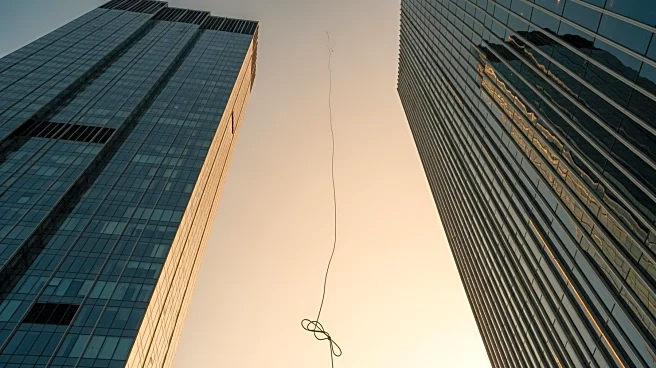
California-born rock climber Alex Honnold successfully ascended the Taipei 101 skyscraper without the use of ropes or protective equipment. The climb, which took place on Sunday, was completed in approximately
90 minutes. Honnold, known for his ropeless ascent of El Capitan in Yosemite National Park, used small L-shaped outcroppings and maneuvered around large ornamental structures to reach the top of the 1,667-foot tower. The climb was broadcast live on Netflix with a 10-second delay, drawing cheers from a street-level crowd. Honnold described the experience as incredible, noting the challenge posed by the windy conditions. This event marks the first time the skyscraper has been climbed without ropes, following a previous ascent by French climber Alain Robert in 2004.
Why It's Important?
Honnold's ascent of Taipei 101 highlights the growing interest in extreme sports and the potential for live broadcasts to engage global audiences. The event underscores the risks associated with high-stakes climbing, raising ethical questions about the safety and responsibility of broadcasting such endeavors. For the climbing community, Honnold's achievement represents a significant milestone, showcasing the limits of human capability and endurance. The successful climb also brings attention to Taipei 101, enhancing its status as a landmark and potentially boosting tourism. However, the event may prompt discussions about the regulation of extreme sports and the responsibilities of media platforms in promoting high-risk activities.
What's Next?
Following the successful climb, there may be increased interest in similar feats, potentially inspiring other climbers to attempt ropeless ascents of iconic structures. This could lead to a reevaluation of safety protocols and the role of media in promoting extreme sports. Stakeholders, including city officials and event organizers, might consider implementing stricter regulations to ensure the safety of climbers and spectators. Additionally, the climbing community may engage in discussions about the ethical implications of such high-risk activities, particularly when broadcast to a global audience.
Beyond the Headlines
The event raises broader questions about the cultural fascination with extreme sports and the boundaries of human achievement. It highlights the tension between personal freedom and public safety, as well as the role of media in shaping public perceptions of risk. The climb may also influence future urban planning and architectural design, as cities consider the potential for their landmarks to become sites of extreme sports. Furthermore, the event could spark debates about the commercialization of adventure sports and the responsibilities of athletes and broadcasters in ensuring ethical practices.