




What's Happening?
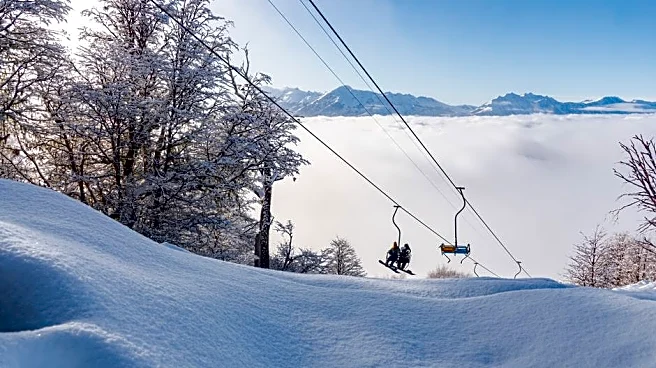
The ski season in the United States has officially begun, with Arapahoe Basin opening on October 28th and Keystone following on October 30th. These resorts, situated at high elevations (Keystone at 9,300 feet, A-Basin and Wolf Creek over 10,000 feet),
are preparing for significant snowfall. A major storm system is forecast to move through the Rockies from Saturday through Monday, bringing heavy snow and gusty winds. While snow guns have aided in early season preparations, the natural snowfall is expected to be substantial, particularly above 9,000-10,000 feet. Winter alerts have been issued for parts of Western Colorado due to the anticipated heavy snow and strong winds, with gusts potentially reaching 40-50 mph at higher elevations. This weather could lead to temporary closures of chair lifts.
Why It's Important?
The early start to the ski season, coupled with significant natural snowfall, is crucial for the U.S. winter tourism industry, particularly in the Rocky Mountain states. A strong early season base can attract more visitors, boosting local economies reliant on ski resorts, hotels, and related businesses. However, the accompanying gusty winds pose operational challenges, potentially disrupting ski lift services and impacting visitor experience. The heavy snowfall, while beneficial for ski conditions, could also create hazardous travel conditions in mountainous regions, affecting accessibility for tourists and local residents. This weather event highlights the delicate balance between favorable snow conditions and the safety and logistical concerns for ski resort operations and regional transportation.
What's Next?
Heavy snow is expected to continue through Sunday morning and into Monday across the Rockies. Ski resorts will monitor weather conditions closely, with potential temporary closures of chair lifts if wind gusts exceed safe operating limits. Mountain travelers should anticipate difficult conditions, especially at higher elevations, and are advised to check forecasts and road conditions before venturing out. The storm system is projected to move into the Plains after Monday, potentially bringing severe weather there. The establishment of a robust snow base from this storm will be critical for the long-term success of the ski season, providing a foundation for future snowfall and sustained operations.
Beyond the Headlines
This early and intense snowfall event underscores the variability of weather patterns and their direct impact on seasonal industries. For the ski industry, an early and strong start can set a positive tone for the entire season, influencing booking trends and revenue. However, the challenges posed by extreme weather, such as high winds, highlight the need for resilient infrastructure and adaptive management strategies in mountain environments. The event also brings into focus the broader implications of climate patterns on regional economies and the recreational activities that depend on specific environmental conditions. The interplay between natural weather phenomena and human-managed recreational spaces will continue to be a significant factor in the economic and social landscape of the Rocky Mountain states.