






What's Happening?
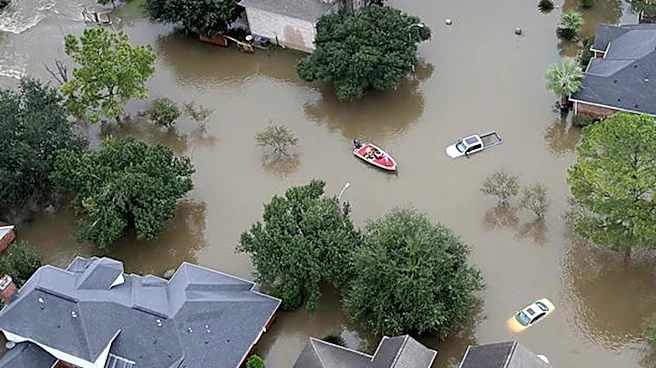
Residents of the New Richland Care Center, a senior living facility in New Richland, Minnesota, were forced to evacuate after nine inches of rain caused severe flooding in the town. The incident occurred on a Saturday, leading to significant damage to the facility and displacing
dozens of residents. Bob Johannsen, an administrator at the New Richland Care Center, described the experience as "awful" and recounted receiving a 3:30 a.m. call to evacuate. He expressed concern for the residents who lost their homes and for his 85 staff members who are now facing job uncertainty. New Richland City Administrator Tyler Lendt emphasized the urgent need for volunteers to assist with the clean-up efforts, noting that the community needs help as interest in the story may wane. The city is in the process of establishing a volunteer coordinator to manage these efforts. New Richland has experienced significant flooding in the past, specifically in 2010 and 2016, but many residents consider this recent storm to be far more severe. Despite the devastation, Johannsen affirmed his love for the community, stating, "You couldn't ask for a better place to live."
Why It's Important?
The displacement of senior residents from the New Richland Care Center due to severe flooding highlights critical vulnerabilities in community infrastructure and emergency preparedness, particularly for vulnerable populations. Senior care facilities often house individuals with limited mobility and specific medical needs, making evacuations complex and disruptive. The incident underscores the broader impact of extreme weather events on small U.S. towns, which may have fewer resources to cope with such disasters compared to larger metropolitan areas. The loss of homes for residents and the potential job losses for staff at the care center represent significant social and economic disruptions within the community. The call for volunteers and the city's efforts to secure state and federal aid demonstrate the immediate need for external support and long-term recovery planning. This event serves as a stark reminder of the increasing frequency and intensity of weather-related disasters and the imperative for communities to invest in resilient infrastructure and robust emergency response systems to protect their most susceptible citizens. The repeated flooding in New Richland also points to a systemic issue that requires permanent solutions to prevent future devastation.
What's Next?
The immediate focus for New Richland is on the extensive clean-up and recovery efforts following the severe flooding. City Administrator Tyler Lendt is actively working to establish a volunteer coordinator to organize and manage the influx of help needed for the community. This coordination will be crucial for efficiently addressing the widespread damage. Concurrently, the city and county authorities are pursuing state and federal funding to implement permanent solutions to mitigate future flooding risks. This indicates a long-term strategy to enhance the town's resilience against extreme weather events. For the displaced residents of the New Richland Care Center, the next steps involve finding alternative housing and support while the facility undergoes repairs or reconstruction. The Waseca Area Foundation is accepting online donations, providing a channel for financial assistance to aid in the recovery process for those affected. The community will likely engage in discussions about infrastructure improvements, zoning regulations, and emergency protocols to better prepare for and respond to similar events in the future, aiming to prevent such widespread devastation from recurring.
Beyond the Headlines
The New Richland flooding incident extends beyond a single natural disaster, revealing deeper societal and environmental implications. The repeated severe flooding in New Richland, with events in 2010, 2016, and now the most recent, suggests a pattern that could be linked to broader climate trends, challenging the town's long-term habitability and economic stability. This situation forces a critical examination of how small, often rural, communities in the U.S. are disproportionately affected by environmental changes and whether existing infrastructure and disaster relief mechanisms are adequate. The vulnerability of senior care facilities in such events highlights an ethical dimension: ensuring the safety and well-being of elderly populations during crises. The emotional toll on residents who have lost their homes and the staff facing job insecurity underscores the profound human cost of these disasters. This event could trigger a re-evaluation of land use planning, building codes, and the allocation of resources for climate adaptation in similar communities nationwide. It also emphasizes the importance of community solidarity and external aid in the face of overwhelming challenges, prompting discussions on how to build more resilient and equitable communities in an era of increasing environmental volatility.