





What's Happening?
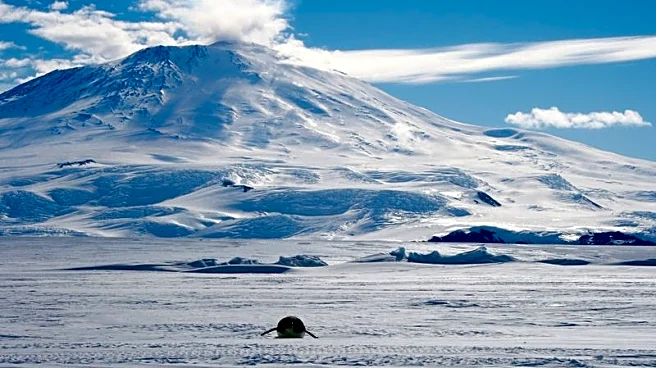
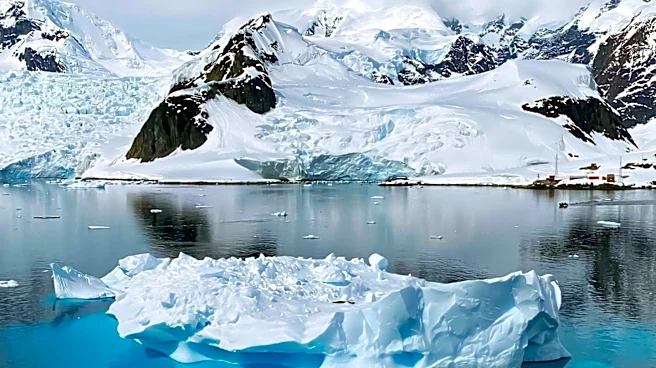
Recent research has uncovered why Antarctica became covered in ice millions of years before the Arctic. The study, published in Science, indicates that geological processes, specifically the uplift of East Antarctica's land surface, played a crucial role.
This uplift, initiated by the breakup of Africa and Antarctica during the Jurassic Period, created high ground necessary for ice accumulation. The ice-albedo effect, where the ice reflects sunlight and cools the region further, along with the drying of the air, allowed the Antarctic ice sheet to expand. These findings provide new insights into the origins of ice ages and the complex interplay between Earth's topography and climate.
Why It's Important?
Understanding the formation of the Antarctic ice sheet is significant for climate science, as it sheds light on the mechanisms behind ice ages and climate transitions. The study highlights the importance of geological processes in shaping Earth's climate, which could inform predictions about future climate changes. The research also emphasizes the role of topography in glaciation, suggesting that similar processes could influence other regions. This knowledge is crucial for developing accurate climate models and understanding potential tipping points in the climate system.