
What's Happening?
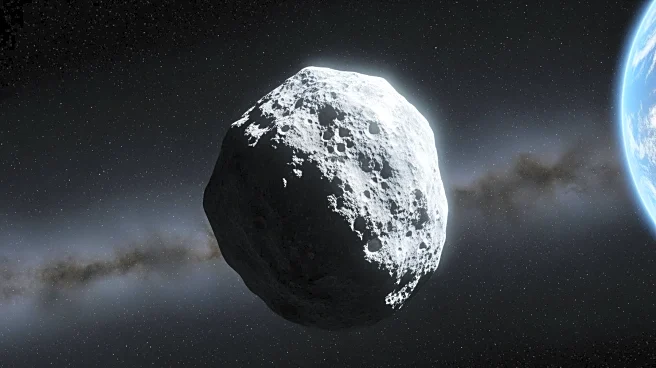
NASA is currently tracking a bus-sized asteroid, designated as 2026 AZ2, which is approaching Earth at a speed exceeding 38,500 miles per hour. According to NASA's Center for Near Earth Object Studies (CNEOS), this asteroid is expected to pass by Earth at a distance
of approximately 217,000 miles, which is considered a safe distance. In addition to 2026 AZ2, NASA is also observing another asteroid, 2026 AR1, which is about the size of a plane and will pass Earth at a distance of 702,000 miles. These asteroids are classified as near-Earth objects, which are celestial bodies that come within 120 million miles of the sun and enter Earth's orbital neighborhood. While the majority of these objects pose no threat, a small subset known as potentially hazardous asteroids (PHAs) requires closer monitoring due to their orbits bringing them within 4.6 million miles of Earth's orbit.
Why It's Important?
The monitoring of near-Earth objects like 2026 AZ2 is crucial for planetary defense and understanding potential threats from space. Although the current asteroids pose no immediate risk, the tracking and study of such objects help scientists prepare for any future scenarios where an asteroid could pose a significant threat to Earth. This vigilance is part of a broader effort to develop strategies and technologies that could mitigate the impact of a potential collision. The data collected from these observations also contribute to our understanding of the solar system's formation and the behavior of asteroids over time.
What's Next?
NASA will continue to monitor these and other near-Earth objects to ensure any potential threats are identified well in advance. The agency's ongoing research and tracking efforts aim to improve prediction models and develop potential deflection strategies. As technology advances, NASA and other space agencies may enhance their capabilities to detect smaller and more distant objects, further safeguarding Earth from potential impacts.