






What's Happening?
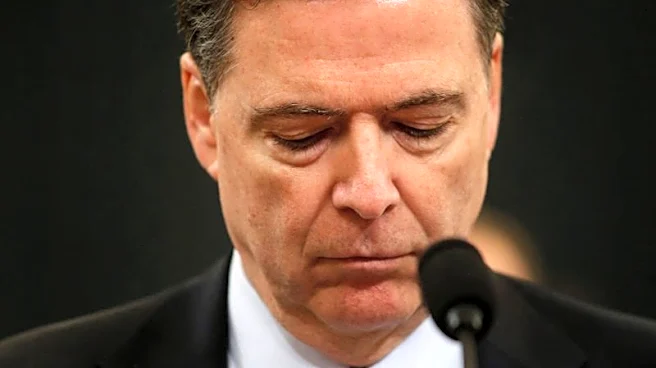
Podcaster Joe Rogan has criticized the Justice Department's indictment of former FBI Director James Comey, calling it 'nuts' and suggesting it sets a 'crazy precedent.' The indictment stems from a social media post by Comey featuring seashells arranged
to spell '86 47,' which the Justice Department interpreted as a threat against President Trump. Rogan, who has previously supported Trump, argued that prosecuting someone for a social media post could undermine First Amendment protections. The indictment has sparked debate among conservatives, with some agreeing with Rogan's assessment and others supporting the legal action. The controversy centers on the interpretation of the term '86,' which is slang for eliminating something, and '47,' a reference to Trump as the 47th president.
Why It's Important?
The indictment of James Comey highlights ongoing tensions between the Justice Department and political figures, raising questions about the limits of free speech and the interpretation of threats. The case has implications for how social media posts are scrutinized and could influence future legal actions against public figures. The reaction from conservatives, including Rogan, underscores a divide within the political right regarding the focus of the Justice Department. Some argue that the department should prioritize issues like the economy and inflation rather than pursuing what they see as politically motivated cases. This situation could impact public perception of the Justice Department's priorities and influence political strategies ahead of upcoming elections.
What's Next?
The legal proceedings against Comey will continue, with potential implications for how similar cases are handled in the future. The debate over the indictment may prompt discussions about the balance between national security and free speech, particularly in the context of social media. Political figures and legal experts may weigh in on the case, influencing public opinion and potentially leading to legislative or policy changes regarding the interpretation of threats. The outcome of the case could set a precedent for how the Justice Department approaches similar situations, affecting both political and legal landscapes.