




What's Happening?
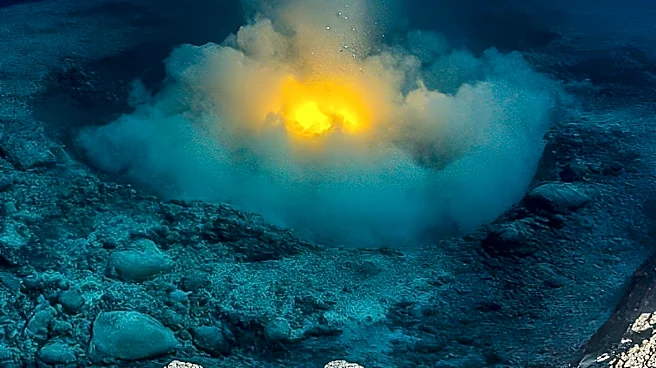
Scientists from Florida International University (FIU), including marine scientist Heather Bracken-Grissom, recently completed a month-long expedition to the deepest hydrothermal vents in the Caribbean Sea. The research team, which also included scientists
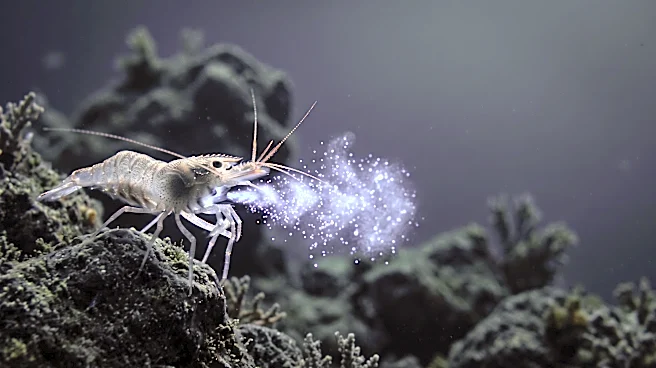
from NOVA Southeastern University, the University of Delaware, and Duke University, aimed to unravel the mystery of how shrimp navigate to these extreme environments. These deep-sea vents, nearly three miles beneath the surface, are characterized by crushing pressure and superheated, chemical-rich water, yet millions of shrimp congregate there. The expedition utilized the human-occupied submersible Alvin for dives, collecting specimens, environmental data, and high-resolution images. A key focus of their investigation is the shrimp's visual sensitivity, genetics, and eye structure, particularly a large light-sensitive organ on some vent shrimp's backs known as a dorsal eye. The team is exploring whether the shrimp detect faint radiation from the hot vents or bioluminescence produced by other organisms to locate these isolated ecosystems.
Why It's Important?
Understanding how life thrives in such extreme conditions has significant implications for astrobiology and the search for extraterrestrial life, as these deep-sea environments are often compared to conditions that might exist on other planets. The research could also provide insights into the fundamental mechanisms of sensory perception and adaptation in organisms, potentially leading to advancements in fields like bio-inspired engineering or medicine. The study of these unique ecosystems contributes to a broader understanding of marine biodiversity and the resilience of life on Earth. Furthermore, the findings could inform conservation efforts for deep-sea habitats, which are increasingly threatened by human activities such as deep-sea mining. The collaborative nature of this research, involving multiple universities, highlights the importance of inter-institutional partnerships in tackling complex scientific questions and advancing marine science.
What's Next?
The research team will continue to analyze the collected data and specimens to further understand the navigational strategies of deep-sea shrimp. This includes detailed examination of the shrimp's visual sensitivity, genetic makeup, and eye structure. They will also continue to use specialized low-light imaging to search the surrounding environment for potential sources of light that could guide the shrimp. Future expeditions may be planned to gather more data or test specific hypotheses generated from the current findings. The scientists are expected to publish their results in scientific journals, contributing to the global body of knowledge on deep-sea biology and extremophiles. The insights gained could also lead to new research avenues into the evolutionary adaptations of marine life in challenging environments.
Beyond the Headlines
The ability of shrimp to navigate and thrive in the deep-sea hydrothermal vents challenges conventional understanding of life's limits. The potential discovery of light-based navigation in an environment devoid of sunlight raises profound questions about the diversity of sensory perception and the evolutionary pressures that drive such adaptations. This research touches upon the philosophical implications of life's tenacity and its capacity to find niches in seemingly uninhabitable places. It also underscores the vast unknowns that still exist within Earth's oceans and the critical need for continued exploration and scientific inquiry. The study of these organisms could reveal novel biochemical pathways or physiological adaptations that have broader scientific and even commercial applications, such as in the development of new materials or pharmaceuticals.