





What's Happening?
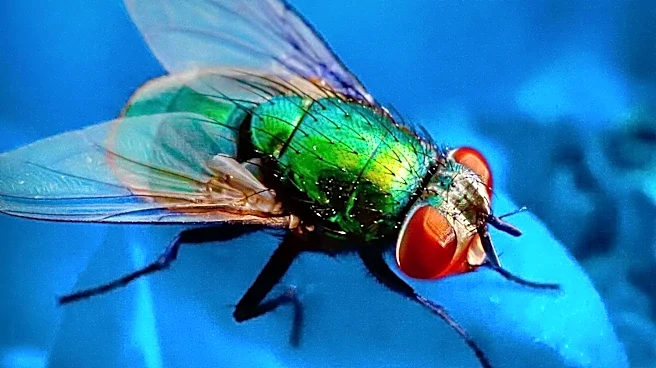
The United States, in collaboration with Mexico and Panama, has released approximately one billion sterile flies as part of an effort to combat the re-emergence of the New World screwworm. This parasitic fly, once considered eradicated in the U.S., Mexico,
and most Central American countries, breached containment barriers in the Darién Gap in 2023 and has been moving northward. The New World screwworm lays its eggs on warm-blooded animals, including humans, with larvae burrowing into living tissue, causing infections and potentially death. The U.S. Department of Agriculture (USDA) confirmed the first U.S. cases in years in June, with fewer than 50 incidents recorded so far this year. The strategy involves mass-breeding the insects, sterilizing them with radiation, and then releasing them. Wild female screwworm flies mate only once; if they mate with a sterile male, no offspring are produced, gradually reducing the population. A billion-fly shipment was sent to Texas from facilities in Chiapas, Mexico, and Panama.
Why It's Important?
The re-emergence of the New World screwworm poses a significant threat to U.S. livestock farming and food production, with potential damage in the southwestern United States alone estimated at $2.5 billion. While the pest does not pose an immediate threat to food safety, its spread could devastate cattle, pets, and wildlife. The current production capacity of sterile flies is insufficient to meet the estimated need of 400-500 million flies per week, with the Panamanian plant producing only about 100 million weekly and the Mexican facility requiring months to reach similar output. This shortfall creates a risk of a widespread outbreak, as evidenced by past incidents where cases rapidly escalated. The slow production of sterile flies means that the pest could threaten various animal populations for years, impacting agricultural economies and potentially requiring substantial long-term control efforts.
What's Next?
The U.S. is actively working to increase its sterile fly production capacity. A new plant in Texas, which began construction in April, is scheduled to open at the end of 2027, aiming to produce 100 million flies per week by then and an additional 300 million by the end of 2028. The USDA also announced a $25 million investment in a sterile-fly distribution center in Arizona, though its launch date is undetermined. To address the production shortfall, the U.S. is testing 'NovoFly' technology, which involves genetically modified flies that are predominantly male, potentially doubling production efficiency. The 'Screwworm Grand Challenge,' a $100 million grant program, has been launched to accelerate the development of new technologies for faster sterile insect production. The success of these efforts will determine whether the pest can be contained before it becomes widely established among U.S. livestock and wild animals.
Beyond the Headlines
The fight against the New World screwworm highlights the ongoing challenges of managing invasive species and the critical role of scientific innovation in agricultural defense. The reliance on sterile insect technique (SIT), a method developed decades ago, underscores its continued relevance but also reveals limitations in scaling up production to meet modern threats. The potential for genetically modified flies (NovoFly technology) introduces a new dimension, raising questions about the broader acceptance and deployment of such biotechnological solutions in pest control. This situation also emphasizes the interconnectedness of ecosystems across national borders, as a breach in a remote rainforest between Colombia and Panama can have significant economic and ecological repercussions in the U.S. The long-term success will depend not only on technological advancements but also on sustained international cooperation and public awareness to monitor and report potential cases.