




What's Happening?
A federal judge is currently deliberating on a lawsuit challenging the expansion of a pit mine in eastern Arizona, which environmental groups claim has severely reduced the flow of Pinto Creek. The Pinto Valley Mine, operated by Capstone Copper, extracts
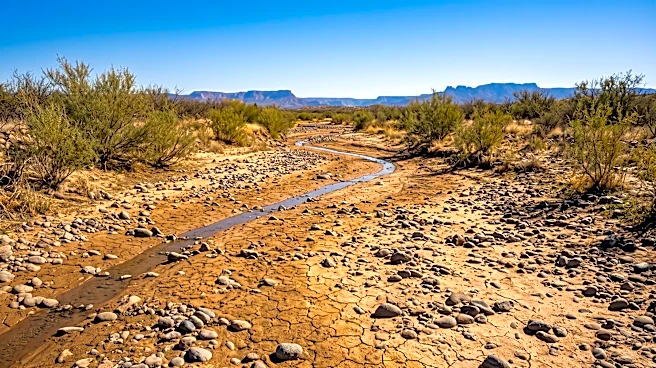
over 5 trillion gallons of water annually from privately owned wells located outside the U.S. Forest Service's direct jurisdiction. This water extraction has led to a more than 90% reduction in Pinto Creek's subflow over the last decade, impacting endangered bird species like the yellow-billed cuckoo and the southwestern willow flycatcher. The Sierra Club, represented by Earthjustice, argues that the Forest Service has regulatory authority over activities on private land that materially harm nearby public land and its resources. The Forest Service, however, claims it lacks authority to limit water pumping from private wells, as groundwater pumping from private wells is regulated by the state, not federal agencies.
Why It's Important?
This case highlights a critical jurisdictional conflict between federal environmental protection and state-level water rights, particularly concerning the impact of private operations on public lands. The U.S. Forest Service's claim of no authority over private well usage, despite acknowledging the resulting degradation of public resources, could set a precedent that weakens federal agencies' ability to protect national forests and endangered species. The significant reduction in Pinto Creek's flow directly threatens the habitats of endangered birds and the overall ecological health of the Tonto National Forest. If the mine's water extraction continues unchecked, it could lead to irreversible environmental damage, impacting biodiversity and the natural resources that public lands are meant to preserve. This situation also raises questions about the effectiveness of existing environmental laws, such as the National Environmental Policy Act and the Endangered Species Act, in addressing cross-jurisdictional environmental challenges.
What's Next?
U.S. District Judge Dominic Lanza is expected to rule on the case as soon as possible, following 2.5 hours of oral arguments. In a tentative ruling, Judge Lanza sided with the Forest Service on the private well question but with the Sierra Club regarding the agency's analysis of subflow effects. The outcome of this ruling will significantly influence the extent of federal oversight on private land activities that impact public resources. Regardless of the judge's decision, the case is likely to spark further debate and potentially legislative action regarding the regulation of groundwater pumping from private wells, especially when it affects federally protected lands and species. Environmental groups will likely continue to advocate for stronger federal intervention, while mining companies and state authorities may push for maintaining state control over water rights. The long-term health of Pinto Creek and its endangered species hinges on the resolution of this complex legal and environmental dispute.
Beyond the Headlines
This case delves into the complex interplay between property rights, environmental stewardship, and governmental authority. The Forest Service's position that it cannot regulate private well pumping, even when it causes significant harm to public lands, exposes a potential loophole in environmental protection laws. It raises ethical questions about the responsibility of private entities to mitigate their environmental impact, especially when their operations affect shared public resources. The case also underscores the broader challenge of managing water resources in arid regions, where competition for water is intense and the ecological consequences of over-extraction are severe. The long-term implications could include a re-evaluation of how federal agencies can assert their mandate to protect public lands against impacts originating from private property, potentially leading to new legal frameworks or inter-agency agreements to address such cross-jurisdictional environmental issues.