
What's Happening?
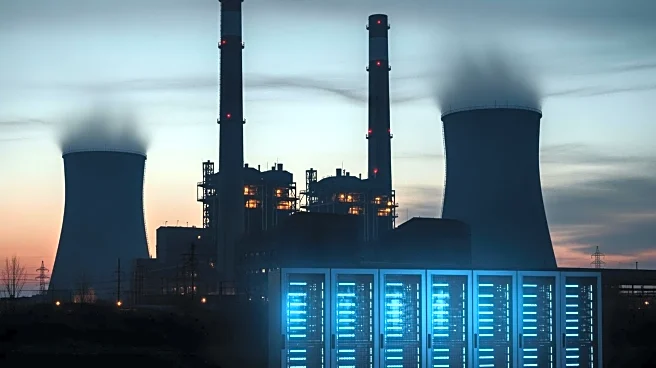
The demand from artificial intelligence (AI) data centers is causing a resurgence in the use of obsolete 'peaker' power plants across the United States. These plants, which are designed to operate during
peak electricity demand periods, are being brought back into service to meet the increasing power needs of data centers. The Fisk power plant in Chicago, owned by NRG Energy, is one such facility that was scheduled for retirement but has been kept operational due to the economic incentives provided by the rising electricity prices in the PJM Interconnection, the nation's largest power market. This trend is leading to significant cost increases for electricity consumers and heightened local pollution, as these older plants emit more sulfur dioxide and other pollutants compared to newer, more efficient power plants.
Why It's Important?
The revival of peaker power plants has significant implications for both the environment and electricity consumers. These plants are often located in low-income communities, exacerbating environmental justice issues as they contribute to local pollution. The increased operation of these plants is driven by the growing energy demands of AI data centers, which are becoming a critical component of the digital economy. However, this reliance on older, less efficient power sources could hinder the transition to cleaner energy solutions and increase electricity costs for consumers. The situation highlights the challenges of balancing the need for reliable power with environmental and economic considerations.
What's Next?
As the demand for electricity continues to rise, particularly from data centers, there may be increased pressure to keep peaker plants operational. This could lead to further delays in the retirement of these facilities, despite their environmental impact. Policymakers and energy companies may need to explore alternative solutions, such as investing in renewable energy sources and improving grid infrastructure, to meet energy demands sustainably. Additionally, there may be increased advocacy from environmental and community groups to address the disproportionate impact of pollution on vulnerable communities.
Beyond the Headlines
The resurgence of peaker plants underscores the broader issue of energy infrastructure and its alignment with environmental goals. The reliance on these plants highlights the need for a more resilient and sustainable energy grid that can accommodate the growing demands of the digital economy without compromising environmental standards. This situation also raises questions about the role of government policy in managing energy transitions and ensuring equitable access to clean energy solutions.