








What's Happening?
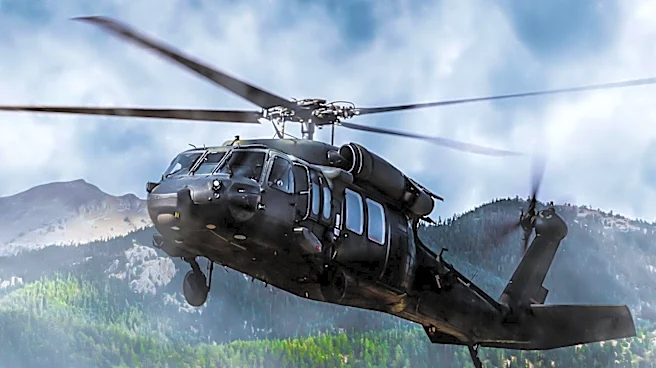
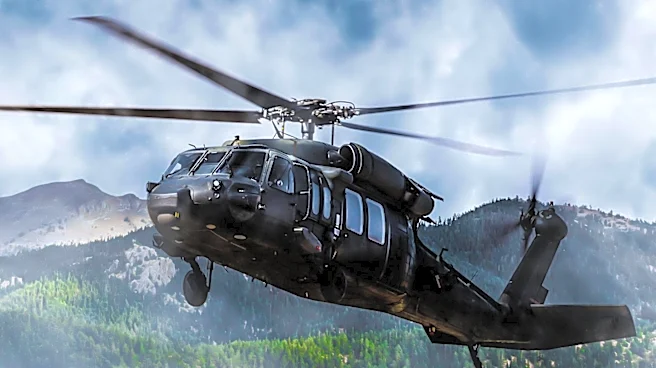
Sikorsky has outlined a multi-phase strategy to upgrade its H-60 Black Hawk helicopters, aiming to extend their operational life for the U.S. Army and other operators potentially through 2070. The Army has formally stated plans to fly Black Hawks until
at least 2050. The 'Black Hawk Next' initiative focuses on four key areas: integrating the GE Aerospace T901 engine, enhancing airframes, developing a new digital backbone, and implementing autonomy upgrades. A significant new development is a modular nose design, unveiled ahead of the Association of the United States Army, which will allow for flexible mounting of new sensors and avionics. Additional airframe improvements include expanding internal fuel tanks without reducing cabin space and strengthening the aircraft structure to support larger payloads. These modifications, combined with the T901 engine, are projected to increase payload capacity by over 1,000 lbs, extend range by 100 nautical miles, and add 45 minutes of time on station. The T901 Improved Turbine Engine has already undergone more than 70 hours of test flights, demonstrating impressive performance, including climbing at high altitudes with significant rates.
Why It's Important?
This extensive upgrade program for the Black Hawk fleet is crucial for U.S. national security and defense capabilities, ensuring the continued relevance and effectiveness of a foundational military asset for decades. By extending the service life of the H-60 through 2070, the U.S. Army and other branches, including the Navy and Air Force, can avoid the substantial costs and logistical challenges associated with developing and fielding an entirely new helicopter platform. The enhancements in payload, range, and autonomy will significantly boost the Black Hawk's operational versatility, allowing it to perform a wider array of missions in diverse and evolving threat environments. The modular nose design offers future-proofing, enabling rapid integration of emerging technologies and sensors, which is vital for maintaining a technological edge. Furthermore, the focus on collaborative sustainment among military services and the U.S. Coast Guard could lead to more efficient maintenance and support operations, optimizing resource allocation and readiness across the board. This initiative also supports the U.S. defense industrial base, particularly Sikorsky, by securing long-term contracts and fostering innovation in aerospace engineering.
What's Next?
Sikorsky plans to introduce these Black Hawk upgrades within the next few years, with modernization efforts potentially taking place at depot facilities or Sikorsky's Stratford, Connecticut, plant. The company is currently in discussions with the U.S. Air Force regarding the next procurement lot for the HH-60W Jolly Green II combat rescue helicopter. A recent Air Force decision to use these helicopters for VIP transit missions in Washington could free up other aircraft for different bases, potentially increasing the overall fleet size. Sikorsky is also exploring options to extend the production of the helicopter and adjust the production rate to accommodate funding and procurement timelines for both the Air Force and potential foreign military sales customers. A new 'Novel Production Agreement' with the U.S. Army, announced on September 30, has already secured $254 million for 16 initial aircraft, with the potential for this number to exceed 100 helicopters. The autonomy upgrades, including the integration of Matrix software, are expected to be offered on the uncrewed S-70UAS U-Hawk, indicating a future direction towards autonomous flight capabilities.
Beyond the Headlines
The Black Hawk Next program represents a broader trend in military aviation towards extending the life and enhancing the capabilities of proven platforms rather than solely pursuing new designs. This approach reflects a strategic shift to maximize return on investment in existing assets while integrating advanced technologies like autonomy and improved propulsion. The emphasis on modularity, particularly with the new nose design, highlights a forward-thinking strategy to adapt to unforeseen future requirements and technological advancements without requiring complete overhauls. The integration of autonomy, through systems like Matrix software, could fundamentally change how these helicopters are operated, potentially reducing pilot workload, increasing safety in hazardous environments, and enabling new mission profiles, including uncrewed operations. This evolution also raises questions about the future of human-machine teaming in military aviation and the ethical considerations surrounding autonomous weapon systems. The long-term sustainment strategy, involving collaboration across different military branches, could set a precedent for future defense programs, promoting interoperability and cost-effectiveness across the U.S. armed forces.