










What's Happening?
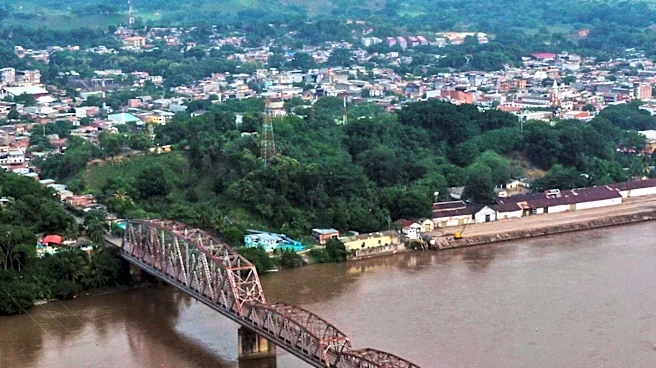
President Claudia Sheinbaum inaugurated the Rizo de Oro bridge in Chiapas, Mexico, on November 7, 2026. This new infrastructure project connects communities in the Frailesca and Sierra Mariscal regions, a connection that has been sought for over 50 years.
The bridge, which spans the La Angostura dam, replaces the previous reliance on small boats (chalanes) for transportation, which were often subject to weather conditions and limited availability. The project is expected to benefit over 300,000 inhabitants across ten municipalities and 21 communities. The Secretary of Infrastructure, Communications and Transport estimates that the bridge, along with the La Concordia bridge inaugurated in 2024, will reduce travel time on state route 230 from six and a half hours to four hours, saving up to two and a half hours for those traveling between Tuxtla Gutiérrez and Frontera Comalapa. The construction of the bridge involved significant logistical challenges due to its location over the reservoir, requiring the use of boats for material transport and a cable-way system for arch assembly.
Why It's Important?
The inauguration of the Rizo de Oro bridge marks a significant development for regional connectivity and economic activity in Chiapas. For decades, communities in the Frailesca and Sierra Mariscal regions have faced isolation and hindered economic growth due to the lack of reliable transportation across the La Angostura dam. The new bridge will drastically reduce travel times, facilitating the movement of people, goods, and services. This improved connectivity is crucial for local economies, particularly for farmers who can now transport their harvests more efficiently to markets. It also enhances access to essential services like healthcare, as patients no longer have to contend with unpredictable boat crossings. The project addresses a long-standing demand from residents, who have experienced significant disruptions to their routes since the dam's construction in the 1970s. The bridge is seen as a step towards rectifying a 'historic debt' to these communities, fostering greater equality and reducing isolation.
What's Next?
While the Rizo de Oro bridge addresses a critical need, local representatives, such as Ramiro Ruiz Espinoza of the Amigo de La Concordia group, have already voiced a request for a second bridge at the Boquerón site. This additional connection would aim to fully restore the original travel distances between La Concordia and Tuxtla Gutiérrez that existed before the dam's construction. An existing preliminary project from the government of Juan Sabines Gutiérrez supports this proposal. The federal Secretariat of Infrastructure, Communications and Transport plans to install instruments on the Rizo de Oro bridge to monitor its performance in real-time, measuring deformations, accelerations, and loads. This ongoing monitoring will inform future maintenance efforts, ensuring the long-term stability and safety of the structure. The continued advocacy for further infrastructure projects suggests a sustained focus on improving regional connectivity in Chiapas.
Beyond the Headlines
The Rizo de Oro bridge project highlights the long-term societal and economic impacts of large-scale infrastructure developments like dams. While the La Angostura dam provided hydroelectric power, its construction in the 1970s inadvertently severed vital land routes, leading to decades of isolation and hardship for local communities. The bridge's completion represents more than just a physical connection; it symbolizes the rectification of a historical oversight and a commitment to regional development. The project also underscores the importance of community engagement in infrastructure planning, as the demand for this bridge persisted for over half a century. The request for a second bridge, even after the inauguration of the first, illustrates the complex and evolving needs of communities affected by such large-scale changes, emphasizing that infrastructure solutions often require a multi-faceted and ongoing approach to truly address historical grievances and foster equitable development.