



What's Happening?
The Kansas City Council has approved $600 million in tax-free bonds for a new Kansas City Royals baseball stadium project, despite Jackson County voters having rejected a similar ballot measure two years prior. The project is slated to receive a total
of $1.14 billion in public funds from the city and the state of Missouri. The agreement, passed by an 11-2 council vote, includes a stipulation that the Royals are not obligated to repay the city-backed bonds, leaving the city responsible for any shortfalls. The proposed 30-year lease also allows the Royals to seek additional public funding for future stadium renovations while paying only $1 annually in rent. Royals owner John Sherman praised the deal as a significant public-private investment, while Councilmember Johnathan Duncan, one of the dissenting votes, criticized the agreement for benefiting the Royals more than the city's residents.
Why It's Important?
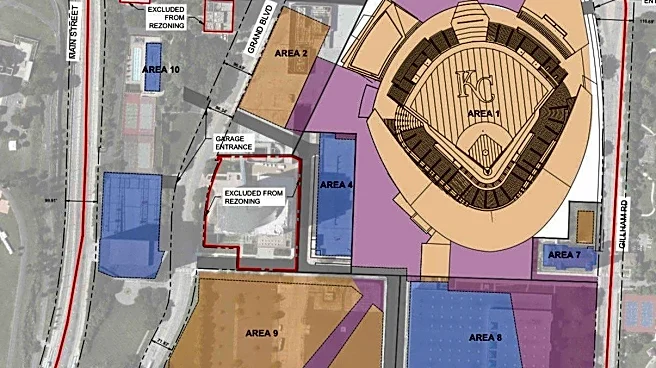
This decision by the Kansas City Council carries significant implications for public finance, democratic processes, and urban development. By approving substantial public funding for a private sports franchise after voters explicitly rejected a similar measure, the council's action raises questions about accountability and the responsiveness of local government to constituent will. The stipulation that the city, not the Royals, will cover bond shortfalls places a considerable financial risk on Kansas City taxpayers, potentially creating a 'debt bomb' for the municipality. This move could set a precedent for how public funds are allocated for private ventures, potentially impacting future civic projects and public trust. The project also involves rezoning and redeveloping the city's Crown Center, a long-standing headquarters for Hallmark Cards, which will alter the urban landscape and potentially displace residents and businesses.
What's Next?
The approval of the $600 million in bonds means the Royals stadium project is set to move forward, with construction and redevelopment plans for the Crown Center area likely to accelerate. However, the controversy surrounding the council's decision may lead to continued public debate and potential legal challenges from community groups and residents who feel their votes were disregarded. Stakeholders, including homeowners in the affected area and workers' rights advocates, have already voiced strong opposition, suggesting ongoing scrutiny of the project's implementation and its community benefits. The long-term financial implications for Kansas City, particularly regarding the city's responsibility for bond shortfalls, will unfold over the coming decades, potentially influencing future municipal budgeting and tax policies.
Beyond the Headlines
The Kansas City Council's decision to fund the Royals stadium project despite voter rejection delves into the complex interplay between economic development, political power, and public sentiment. It highlights a recurring tension in urban planning where the perceived economic benefits of large-scale projects, often championed by powerful private entities, clash with the democratic will and financial concerns of the populace. The 'public-private partnership' model, as seen here, often raises ethical questions about the distribution of risk and reward, with public entities frequently bearing the financial burden while private corporations reap the profits. This situation could also ignite broader discussions about the influence of special interests in local governance and the mechanisms available for citizens to ensure their voices are heard and respected in major civic decisions.