





What's Happening?
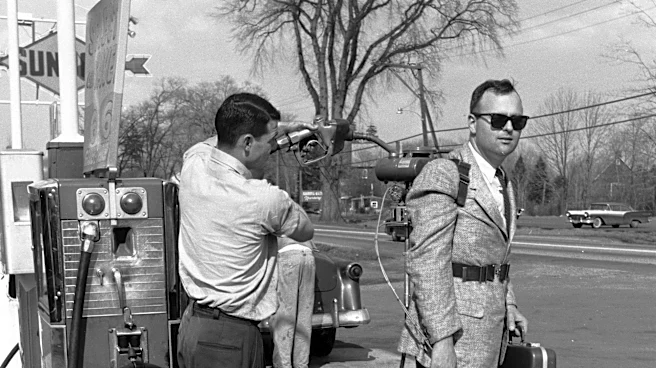
A photograph from 1941 depicts a Flying A gas station located at 400 N. Rexford Drive in Beverly Hills. The station appears to be relatively new, characterized by its pristine white paint and lack of oil spills, suggesting a high standard of maintenance,
possibly due to its affluent location. The exact price of gasoline at the time is not visible in the photograph, as the signage on the right is obscured. This location is now occupied by the Beverly Hills Library. The image provides a historical snapshot of a gas station from the mid-20th century, reflecting the architectural and operational standards of the era.
Why It's Important?
This historical image offers valuable insight into the evolution of retail infrastructure and consumer services in the United States. The gas station, a ubiquitous part of American life, has undergone significant transformations over the decades. Understanding its past helps contextualize current trends in fuel distribution, urban planning, and consumer behavior. The high standard of maintenance noted for this Beverly Hills station in 1941 suggests that even then, location and clientele influenced service quality and appearance. This historical perspective can inform discussions about urban development, the changing landscape of commercial properties, and the long-term impact of automotive culture on American cities.
What's Next?
While this specific article focuses on a historical image, the broader context of gas stations continues to evolve. The future of fuel retail in the U.S. is increasingly influenced by the transition to electric vehicles, renewable energy sources, and changing consumer preferences. Historical sites like the former Flying A station, now a library, illustrate how urban spaces are repurposed over time to meet new community needs. Future developments in the energy sector will likely lead to further transformations of existing gas station sites, potentially converting them into charging hubs, mixed-use developments, or other community-oriented facilities. The ongoing shift away from fossil fuels will continue to redefine the role and appearance of fuel retail locations.
Beyond the Headlines
The image of the Flying A gas station in Beverly Hills subtly highlights the cultural significance of the automobile in American society during the mid-20th century. Gas stations were not merely points of sale for fuel but also symbols of freedom, mobility, and the burgeoning car culture. The pristine condition of this particular station suggests a certain aspirational quality associated with car ownership and travel in affluent areas. This historical context can deepen our understanding of how infrastructure shapes social norms and economic development. It also prompts reflection on how current technological shifts, such as the rise of electric vehicles, are once again reshaping our relationship with transportation and the urban environment, potentially leading to new cultural symbols and practices.