

What's Happening?
Ukrainian President Volodymyr Zelenskyy has expressed strong disapproval of the United States' decision to implement a 30-day waiver on Russian oil sanctions. This waiver, announced by the U.S. Treasury Department, aims to alleviate supply shortages caused
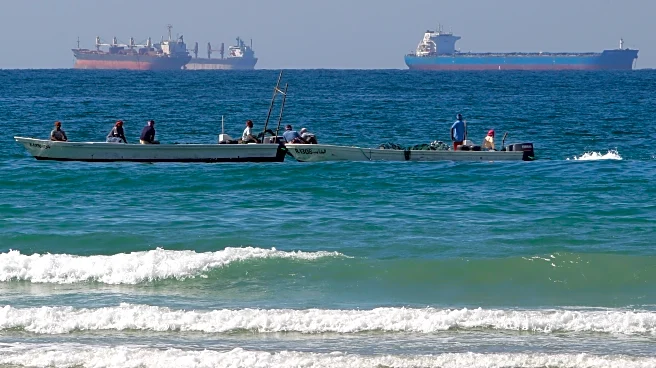
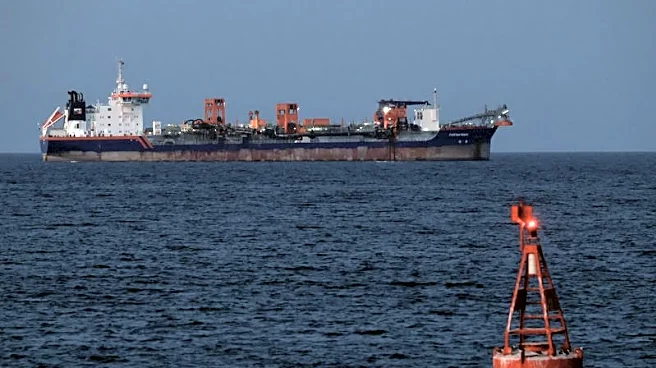
by the ongoing conflict in Iran by allowing Russian oil cargoes stranded at sea to be freed up. Zelenskyy argues that this decision could provide Russia with approximately $10 billion, which he claims will be used to fund its military operations against Ukraine. He voiced these concerns during a press conference with French President Emmanuel Macron in Paris. Zelenskyy emphasized that the easing of sanctions strengthens Russia's position and undermines peace efforts. The waiver has also been criticized by German Chancellor Friedrich Merz, who stated that it sends the wrong signal and questioned the motives behind the U.S. government's decision.
Why It's Important?
The U.S. waiver on Russian oil sanctions has significant implications for international relations and the ongoing conflict in Ukraine. By potentially providing Russia with substantial financial resources, the waiver could inadvertently bolster Russia's military capabilities, prolonging the conflict in Ukraine. This decision has sparked criticism from European leaders, highlighting a divide in international approaches to handling Russian aggression. The waiver also raises questions about the balance between addressing immediate energy supply issues and maintaining pressure on Russia through sanctions. The outcome of this decision could influence future diplomatic negotiations and the stability of the region.
What's Next?
The U.S. waiver is temporary, and its impact on the conflict in Ukraine and international relations will be closely monitored. U.S.-mediated talks between Moscow and Kyiv, which are currently on hold due to the Iran war, may resume soon, potentially influencing future decisions on sanctions. Additionally, Ukraine is seeking to enhance its defense capabilities by proposing a drone production deal with the U.S., which could shift the dynamics of military support in the region. The international community will likely continue to debate the effectiveness and consequences of sanctions as a tool for conflict resolution.