





What's Happening?
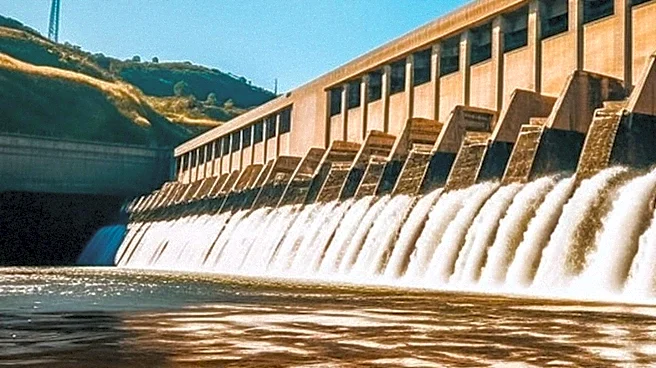
Senator Kevin Cramer has announced $24 million in funding for the Garrison Dam Spillway Approach Rehabilitation Project in North Dakota. This project aims to address damage and potential safety risks identified after the spillway's first use during the 2011
Missouri River flood. The Garrison Dam, the world's fifth-largest earthen dam, had its spillway unused for over 50 years until the 2011 flood, which, despite operating at only 18% of its capacity, caused damage to the concrete chute and dislodged drainage covers. A post-flood review concluded that the spillway had a flaw with a low probability of failure but could still threaten downstream cities. The rehabilitation project, which began after a June 2023 study, includes dredging, riprap protection, and a complete replacement of the drainage system to eliminate manhole covers within the spillway. This phase is expected to be completed by April 2028.
Why It's Important?
The rehabilitation of the Garrison Dam spillway is crucial for the safety and infrastructure integrity of North Dakota and the broader Missouri River system. The incident at Garrison Dam, along with similar issues at Oroville Dam in California and Glen Canyon Dam, highlights a significant problem with dam spillways that remain untested for extended periods. Concrete degrades, drainage systems corrode, and hillsides weather, none of which are apparent during inspections of dry spillways. The $24 million investment underscores the federal government's commitment to maintaining critical infrastructure and mitigating potential disasters. The project will ensure the dam's ability to safely manage future flood events, protecting communities, agricultural lands, and economic activities downstream from potential catastrophic failures. This also sets a precedent for evaluating and maintaining other long-unused spillways across the U.S.
What's Next?
The Garrison Dam Spillway Approach Rehabilitation Project is currently underway, with the dredging and riprap protection phase anticipated to conclude by April 2028. The broader project involves replacing the entire drainage system to prevent future issues with manhole covers. Following the completion of these repairs, the dam's spillway will be better equipped to handle high-flow events, reducing the risk to downstream populations and infrastructure. The lessons learned from Garrison, Oroville, and Glen Canyon Dams may prompt further assessments and rehabilitation efforts for other aging dam spillways across the United States that have not been tested in decades. This ongoing work will likely involve continued federal funding and oversight to ensure the long-term safety and operational reliability of these critical water management structures.
Beyond the Headlines
The issues uncovered at the Garrison Dam, and other major U.S. dams like Oroville and Glen Canyon, reveal a systemic challenge in infrastructure management: the hidden risks of untested components. While spillways are designed as a last resort and are engineered for extreme events, their prolonged disuse can mask underlying structural vulnerabilities that only become apparent under stress. This situation raises broader questions about the inspection protocols and maintenance strategies for critical infrastructure that may appear sound but harbor latent defects. The ethical dimension involves balancing the cost of proactive, comprehensive testing and maintenance against the potential for catastrophic failure and the associated human and economic toll. Culturally, there's a need to shift from a reactive approach, where repairs are initiated only after a failure or near-failure, to a more proactive, preventative maintenance paradigm for long-standing public works.