








What's Happening?
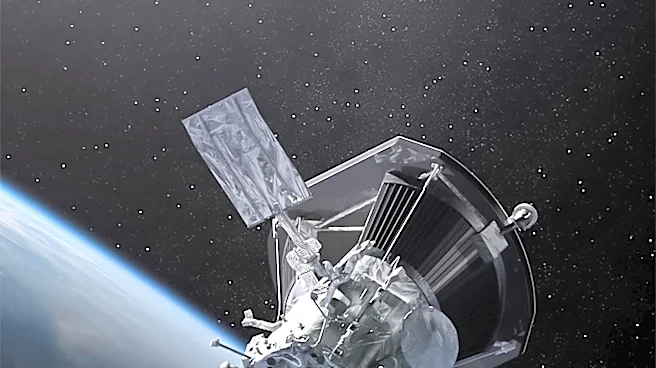
Reflect Orbital, a space technology company, has received approval from the Federal Communications Commission (FCC) to launch its Eärendil-1 satellite. This satellite is equipped with a large reflective mirror designed to redirect sunlight onto Earth,
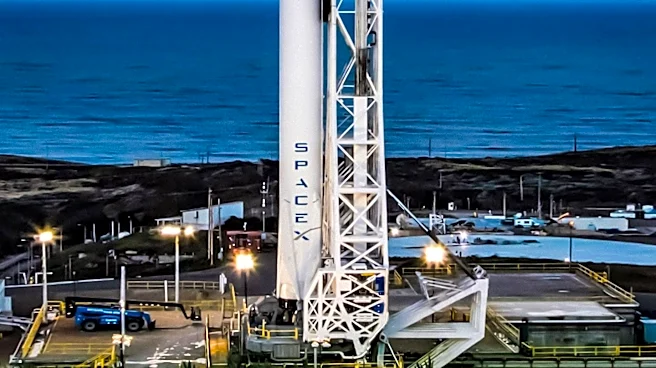
potentially illuminating areas that are otherwise dark. The satellite, which will be launched on a SpaceX Falcon 9 rocket later in 2026, features a mirror measuring 18 meters by 18 meters. The company aims to use this technology to power solar panels at night, addressing the issue of energy demand spikes at sunset. However, the initiative has sparked significant concern among astronomers and environmental groups due to potential light pollution and its impact on astronomical observations.
Why It's Important?
The approval of Eärendil-1 represents a significant development in space-based energy solutions, potentially offering a new method to harness solar power continuously. However, the project has raised alarms within the scientific community, particularly among astronomers who fear that the satellite's reflective capabilities could disrupt astronomical research by increasing light pollution. The American Astronomical Society and other organizations have expressed concerns that the satellite's brightness could interfere with sensitive equipment and obscure celestial observations. The broader implications of deploying such technology include potential regulatory challenges and environmental impacts, as the project lacks a clear regulatory framework for space-based lighting services.
What's Next?
Reflect Orbital plans to monitor the performance of Eärendil-1 as a test case before considering the deployment of additional satellites. The company has expressed willingness to collaborate with scientists to mitigate potential negative impacts, such as avoiding direct reflections on observatories. If successful, Reflect Orbital envisions launching up to 50,000 satellites, which would significantly expand the scope of the project. This expansion could lead to further regulatory scrutiny and necessitate international cooperation to address the environmental and scientific concerns raised by the astronomical community.