


What's Happening?
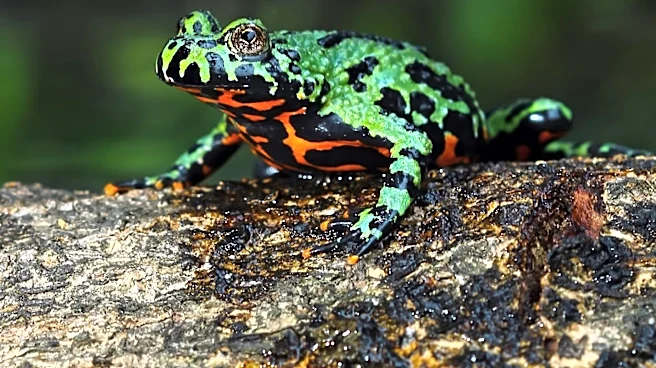
A new species of extinct amphibian, the spadefoot toad Spea labreae, has been discovered at the La Brea Tar Pits in Los Angeles. This marks the first time a new species of extinct amphibian from the Ice Age has been identified at this site. The discovery
was made by Dr. Alberto Cruz, a researcher at the Samuel Oschin Global Center for Ice Age Research, who initially mistook the specimen for a sick or injured toad. Further examination revealed it to be a distinct species, separate from known spadefoot toads. The findings, published in the Journal of Vertebrate Paleontology, highlight the ongoing research and discoveries at the La Brea Tar Pits, which continue to provide insights into the climate and environment of the last Ice Age.
Why It's Important?
The discovery of Spea labreae is significant as it provides new insights into the climate and environmental conditions at the end of the last Ice Age. Amphibians, due to their sensitivity to environmental changes, serve as excellent indicators of past climates. This discovery not only adds to the understanding of the biodiversity of the Ice Age but also helps scientists predict how current amphibian species might respond to modern climate change. The presence of the Mexican burrowing toad, Rhinophrynus, in the same area, which is now found only in southern Mexico, further underscores the dramatic environmental shifts that have occurred since the Ice Age.
What's Next?
The ongoing research at the La Brea Tar Pits is expected to continue uncovering new species and providing further insights into ancient climates. Dr. Cruz and his team plan to continue examining the collections of amphibians and reptiles at the Tar Pits, which have not been thoroughly studied in decades. These efforts may lead to the discovery of additional extinct species, offering a more comprehensive understanding of the environmental changes that occurred at the end of the Ice Age and how they relate to current climate challenges.
Beyond the Headlines
The discovery of Spea labreae highlights the importance of revisiting and re-evaluating existing collections in museums and research centers. It demonstrates that even well-studied sites like the La Brea Tar Pits can yield new scientific insights. This finding also emphasizes the role of small, often overlooked species in understanding broader ecological and climatic changes, challenging the focus on larger, more charismatic megafauna.