





What's Happening?
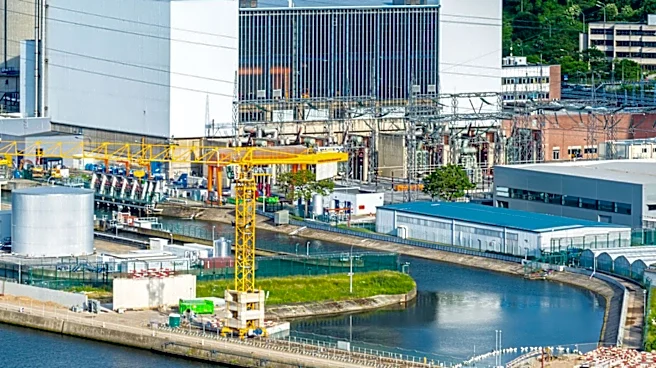
Asia is currently leading the world in new nuclear power capacity construction, accounting for 73% of the 91 gigawatts (GW) under construction globally, according to data compiled by Reuters columnist Gavin Maguire and the Global Energy Monitor's Global Nuclear
Power Tracker. This translates to approximately 66 GW of new nuclear capacity being built across the continent. China is at the forefront, with over 43 GW under construction, followed by India with 6.6 GW, Japan with 6.1 GW, and South Korea with 5.6 GW. This surge in nuclear development in Asia is largely driven by a heightened focus on energy security and the necessity to meet rapidly increasing electricity demand using domestic resources. The region also leads in utility solar and wind power construction, indicating a broad strategy to diversify energy sources.
Why It's Important?
The significant investment in nuclear energy across Asia has profound implications for global energy markets and climate change efforts. For the U.S., this trend highlights a shifting global energy landscape where traditional fossil fuel reliance is being challenged by a mix of renewables and nuclear power. While the U.S. has a substantial operating nuclear fleet, the rapid expansion in Asia could influence international energy policy, technology development, and supply chains for nuclear components. The emphasis on energy security in Asia, partly spurred by events like the Middle East crisis and fluctuating oil and gas prices, underscores a global imperative to reduce dependence on volatile energy imports. This could lead to increased competition for nuclear technology and expertise, potentially impacting U.S. nuclear industry exports and collaborations.
What's Next?
The ongoing construction of nuclear power plants in Asia is expected to continue for several years, with the potential to significantly alter long-term gas and coal demand patterns in the region's economies. As these new capacities come online, they will contribute to a more diversified energy mix, aiming to provide stable, large-scale power generation with low operational carbon emissions. The focus on homegrown resources suggests a continued push for self-sufficiency in energy, which could reduce global fossil fuel demand and prices. Future developments will likely involve further technological advancements in nuclear energy, including small modular reactors (SMRs), and increased international cooperation or competition in nuclear technology and safety standards.
Beyond the Headlines
The aggressive pursuit of nuclear energy in Asia, alongside renewable energy expansion, reflects a strategic pivot towards energy independence and climate goals. This dual approach suggests a recognition that while renewables are crucial, nuclear power offers a reliable, baseload electricity source necessary for industrial growth and stability. The long-term implications extend to geopolitical dynamics, as countries with robust nuclear programs may gain greater leverage in international relations. Furthermore, the challenges of nuclear waste management and safety, though not explicitly detailed in the source, remain critical considerations that will shape public acceptance and regulatory frameworks as these projects progress. The scale of Asia's nuclear build-out could also accelerate innovation in reactor design and operational efficiency globally.