
What's Happening?
Farmers across the United States are facing significant challenges due to rising costs and climate-related impacts on agriculture. The U.S. Department of Agriculture has reported poor wheat harvests in states
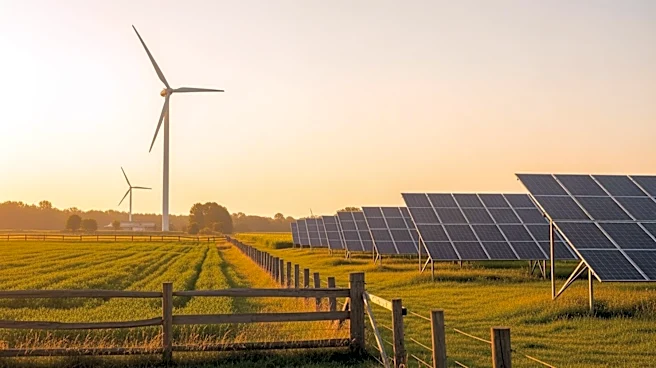
like Kansas and Oklahoma, with yields significantly lower than previous years. Rising costs of diesel and fertilizers, exacerbated by tariffs and geopolitical tensions, are further straining farmers' finances. However, renewable energy projects, such as wind and solar, are emerging as a financial lifeline. These projects offer farmers stable income through land leases and royalties, helping to offset the volatility in agricultural income. In 2024, several states reported significant revenues from wind and solar energy, providing much-needed financial resilience to rural communities.
Why It's Important?
The integration of renewable energy into rural economies is crucial for the financial stability of U.S. farmers. As traditional agricultural income becomes increasingly unpredictable due to climate change and economic pressures, renewable energy offers a reliable alternative revenue stream. This shift not only supports farmers but also contributes to local economies through tax revenues and job creation. The financial benefits from renewable energy projects can help sustain rural communities, preventing farmland from being sold for non-agricultural development. This development aligns with broader national goals of increasing renewable energy capacity and reducing carbon emissions.
What's Next?
As renewable energy infrastructure continues to expand, more rural areas are expected to benefit from these projects. The focus will likely be on balancing energy development with agricultural practices to ensure that farmland remains productive. Policymakers and local governments may need to address concerns about land use and visual impacts to maximize community support for renewable projects. Additionally, ongoing research and development in renewable technologies could further enhance the economic benefits for rural areas.
Beyond the Headlines
The transition to renewable energy in rural areas also raises questions about land use and community identity. While renewable projects provide financial benefits, they can alter the traditional rural landscape, leading to debates about preserving 'rural character.' Moreover, the involvement of large energy companies in rural economies may shift local power dynamics, necessitating careful negotiation of community benefits agreements to ensure that local priorities are met.