



What's Happening?
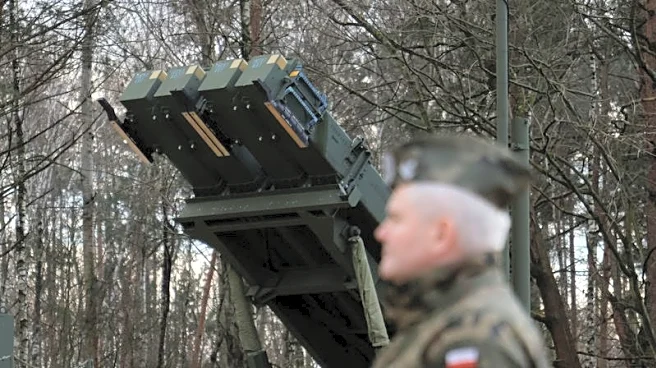
Polish President Karol Nawrocki has refused to sign a law that would allow Poland to access nearly $51 billion in defense loans from the European Union. This decision is based on Nawrocki's belief that such loans would increase Poland's dependency on Brussels.
Instead, he has proposed an alternative draft law that suggests using national resources for defense investments. This move comes amid increased defense spending by Poland following Russia's invasion of Ukraine in 2022. The liberal government, led by Donald Tusk, supports coordination with the EU, while Nawrocki, known for his euro-skeptic stance, has maintained a closer relationship with the Trump administration. Nawrocki has until March 20 to make a final decision on the veto.
Why It's Important?
The refusal to accept the EU defense loan highlights a significant political divide within Poland regarding its relationship with the European Union. Nawrocki's decision could impact Poland's defense capabilities and its position within the EU. The EU's SAFE program, which Poland was set to benefit from, aims to enhance European defense readiness, especially as the U.S. reduces its security role in Europe. Nawrocki's stance may also affect Poland's domestic defense industry, as the EU funds were intended to support local projects. The U.S. has criticized the EU's defense initiatives for limiting market access for American companies, which adds another layer of complexity to the situation.
What's Next?
If President Nawrocki vetoes the law, the Polish government may need to explore alternative funding strategies for its defense projects. This could involve more restrictive conditions under the SAFE program or entirely different funding sources. The ongoing political tension between Nawrocki and the liberal government may lead to further legislative challenges. Additionally, the EU and U.S. may continue to express concerns over Poland's defense funding decisions, potentially influencing future diplomatic and economic relations.