






What's Happening?
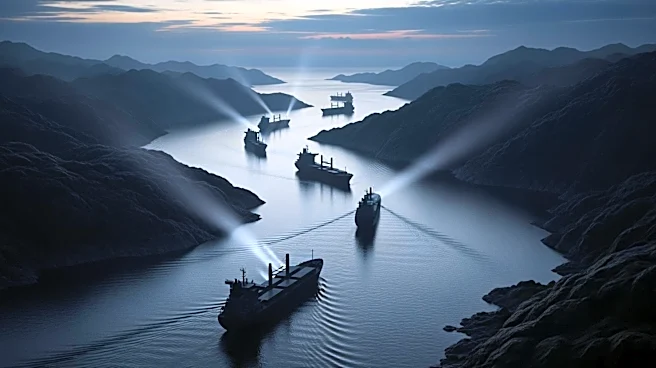
Iran is consolidating its control over the Strait of Hormuz by implementing a complex system of island checkpoints, diplomatic deals, and sometimes fees for safe passage. This strategic chokepoint, crucial for global oil supply, is now under de facto
Iranian control, affecting international shipping routes. The Islamic Revolutionary Guard Corps (IRGC) plays a central role in this mechanism, which includes government-to-government arrangements and a detailed vetting process for ships. The system prioritizes vessels from Iran's allies and involves security and navigation fees, although these payments are closely guarded secrets due to potential violations of U.S. sanctions. The U.S. Treasury Department has warned against making payments to the Iranian regime, highlighting the risks of engaging with Iranian entities.
Why It's Important?
Iran's control over the Strait of Hormuz has significant implications for global energy markets and international relations. The strait is a vital passage for about a fifth of the world's oil supply, and Iran's actions could disrupt global oil flows, leading to increased energy prices and economic instability. The situation also poses challenges for international shipping companies, which must navigate complex diplomatic and legal landscapes to ensure safe passage. The U.S. and other Western countries may face increased pressure to respond to Iran's actions, potentially escalating tensions in the region. The new mechanism also highlights the strategic importance of the Strait of Hormuz and Iran's influence over global energy security.
What's Next?
The international community, particularly countries reliant on oil passing through the Strait of Hormuz, may seek diplomatic solutions to ensure the free flow of goods. The U.S. and its allies might increase naval presence in the region to counter Iran's control. Additionally, countries affected by the new mechanism may explore alternative routes or increase energy reserves to mitigate potential disruptions. The situation could lead to further negotiations between Iran and other nations to establish a more stable and transparent transit system. Monitoring the developments in the Strait of Hormuz will be crucial for understanding the future dynamics of global energy security.