



What's Happening?
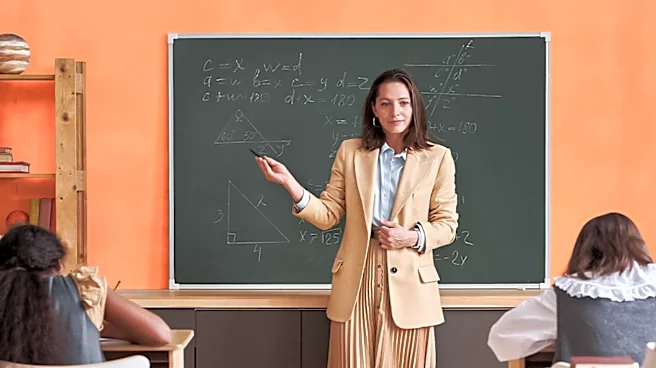
Southold Elementary School has welcomed Ms. Fina as a new teacher dedicated to integrating science and art through STEAM education for students from kindergarten through sixth grade. Ms. Fina, who previously worked as a substitute teacher in Deer Park
and a STEM teacher at St. Agnes Cathedral School, discovered her passion for hands-on, project-based learning. She earned an associate degree in early childhood education from Suffolk Community College, a bachelor’s in child study from St. Joseph’s University, and a master’s in educational technologies and learning design from SUNY Empire University. In her new role, Ms. Fina will be working with all elementary students, introducing them to the 'A' for arts in STEAM, which she believes has always been present but not explicitly labeled. The school plans to implement co-teaching in her classroom, fostering collaboration among students and teachers. Superintendent Anthony Mauro expressed enthusiasm for Ms. Fina's addition, highlighting the opportunity for students to engage their creative side.
Why It's Important?
The introduction of a dedicated STEAM teacher in Southold Elementary School signifies a growing recognition in U.S. education of the importance of interdisciplinary learning, particularly the integration of arts with science, technology, engineering, and mathematics. This approach moves beyond traditional STEM education by emphasizing creativity, critical thinking, and problem-solving skills, which are increasingly vital in the modern workforce. For students, this means a more engaging and hands-on learning experience that can foster a deeper understanding of complex concepts and encourage innovation from a young age. For the U.S. education system, this initiative reflects a broader trend towards preparing students for future careers that demand both technical proficiency and creative adaptability. The co-teaching model also promotes collaborative skills, which are essential for success in various professional environments. This development could serve as a model for other school districts looking to enhance their educational offerings and better prepare their students for a rapidly evolving world.
What's Next?
Southold Elementary School will continue to develop and implement its STEAM curriculum under Ms. Fina's guidance. The co-teaching model will be put into practice, with teachers collaborating to provide a comprehensive learning experience. Students can expect to engage in more hands-on projects that blend scientific principles with artistic expression, similar to Ms. Fina's previous work creating miniature cities and spaghetti bridges. The school will likely monitor the effectiveness of this integrated approach, potentially sharing its successes and challenges with other districts. This initiative could also lead to further professional development opportunities for other teachers in Southold, encouraging them to incorporate STEAM principles into their own classrooms. Over time, the program's success could influence state-level educational policies and funding for STEAM initiatives, potentially expanding access to similar programs across the U.S.
Beyond the Headlines
The deeper implication of Southold's STEAM initiative lies in its potential to reshape educational philosophy and societal values regarding learning. By explicitly integrating arts into STEM, the school is challenging the traditional separation of academic disciplines and promoting a holistic view of intelligence. This approach can help dismantle the perception that certain subjects are only for 'science-minded' or 'artistic' individuals, fostering a more inclusive learning environment where all students can find their strengths. Culturally, this could lead to a greater appreciation for the creative process in problem-solving and innovation, moving beyond rote memorization towards a more dynamic and imaginative educational experience. Ethically, it underscores the importance of providing equitable access to diverse learning opportunities, ensuring that all students, regardless of their background, can develop a broad range of skills necessary for future success and civic engagement. This shift could ultimately contribute to a more creative, adaptable, and well-rounded future workforce and citizenry.