



What's Happening?
A senior official from the Food and Agriculture Organization (FAO) has raised concerns about the inadequate allocation of climate finance towards agricultural resilience, despite the sector's critical role in climate adaptation. According to a joint report
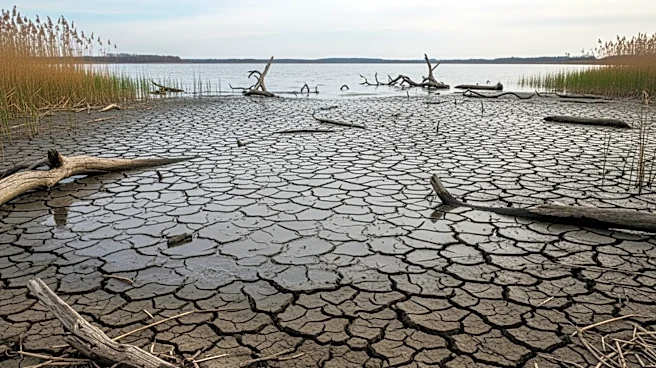
by the World Meteorological Organization (WMO) and FAO, only about 4% of climate finance is directed towards strengthening resilience in agriculture, even though the sector is on the frontline of climate risks. The report, titled 'Extreme Heat and Agriculture,' highlights the increasing impacts of extreme heat on agriculture, food systems, ecosystems, and human life. It warns that some regions could face up to 250 days per year that are too hot to work, emphasizing the need for robust early warning systems and climate-resilient agricultural practices. Kaveh Zahedi, assistant director general and director of the Office of Climate Change, Biodiversity and Environment at FAO, stressed the importance of preparing farmers for these challenges to ensure future food security.
Why It's Important?
The limited allocation of climate finance to agriculture is significant because the sector is crucial for both climate adaptation and mitigation. Agriculture and food systems account for roughly one-third of global greenhouse gas emissions, making them a key area for reducing emissions. The lack of sufficient funding could hinder efforts to build resilience against climate change impacts, such as extreme heat, which threatens food security and livelihoods. The FAO's call for increased investment in early warning systems and practical guidance for farmers is vital to protect vulnerable communities and ensure sustainable food production. The upcoming COP31 summit in Türkiye presents an opportunity to address these issues and integrate agriculture more prominently into climate discussions.
What's Next?
The FAO is engaging in discussions with Türkiye's COP31 presidency to emphasize the role of food systems in addressing climate challenges. The summit, scheduled for November, could serve as a platform to advocate for increased climate finance for agriculture and to highlight the sector's importance in both adaptation and mitigation efforts. The FAO aims to maintain momentum from previous climate summits, where agriculture has become increasingly central. The organization hopes to secure commitments that will enhance agricultural resilience and reduce emissions, aligning with the goals of the Paris Agreement.
Beyond the Headlines
The underfunding of agricultural resilience has broader implications for global food security and economic stability. As climate change intensifies, the risk of crop failures and food shortages could increase, leading to higher food prices and social unrest. Strengthening agricultural resilience is not only a matter of environmental sustainability but also of economic and social stability. The FAO's emphasis on practical, actionable advice for farmers highlights the need for integrated approaches that combine technological innovation with traditional knowledge to adapt to changing climate conditions.