




What's Happening?
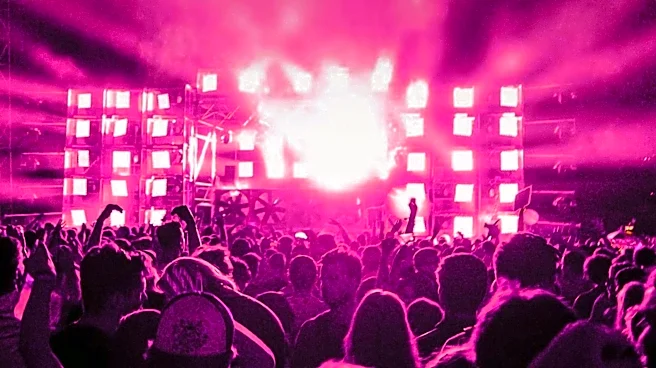
During their recent concerts in Toronto, both Iron Maiden and Christopher Cross addressed the rising tensions between Canada and the United States. Iron Maiden's vocalist Bruce Dickinson commented on President Trump's renaming of Lake Ontario to 'Lake
America' and the imposition of a 50 percent tariff on Canadian goods. Christopher Cross, during his performance, expressed embarrassment over the U.S. political climate, referencing a 'dark time' in his country and criticizing President Trump. Cross began his set with his song 'Dreamers,' which includes a snippet of Martin Luther King Jr.'s 'I Have A Dream' speech, and urged the audience not to give up on the U.S., citing an upcoming election as an opportunity for change.
Why It's Important?
The statements by Iron Maiden and Christopher Cross during their Toronto concerts highlight the intersection of entertainment and international politics, particularly concerning U.S.-Canada relations. The artists' comments reflect a growing public sentiment and concern over political decisions, such as the renaming of a shared natural landmark and trade tariffs, which can strain diplomatic ties and impact economic stability. For the U.S., these remarks underscore how its domestic political actions can resonate internationally and influence public perception abroad. The artists' use of their platforms to voice political opinions can also mobilize public discourse and potentially influence voter sentiment, especially in an election year, demonstrating the cultural impact of musicians beyond their artistic contributions.
What's Next?
As the U.S. approaches an election, the sentiments expressed by artists like Christopher Cross and Iron Maiden may continue to be echoed by other public figures, potentially intensifying the political discourse. The ongoing trade tensions and diplomatic issues between the U.S. and Canada, as highlighted by the artists, will likely remain subjects of public and political debate. The upcoming election will be a critical juncture for addressing these issues, with potential shifts in policy depending on the outcome. The entertainment industry may see more artists using their platforms to comment on political and social issues, further blurring the lines between culture and politics.
Beyond the Headlines
The artists' comments delve into deeper implications regarding national identity, international relations, and the role of cultural figures in political commentary. President Trump's renaming of Lake Ontario, while symbolic, touches upon issues of sovereignty and respect for shared resources, potentially fostering resentment among Canadians. The imposition of tariffs reflects protectionist economic policies that can disrupt established trade relationships and impact consumers in both countries. Christopher Cross's reference to a 'dark time' and Martin Luther King Jr.'s speech evokes historical struggles for civil rights and suggests a concern for democratic values, indicating that the current political climate is perceived by some as a regression. This highlights the power of music and celebrity to articulate and amplify public anxieties about governance and societal direction.