


What's Happening?
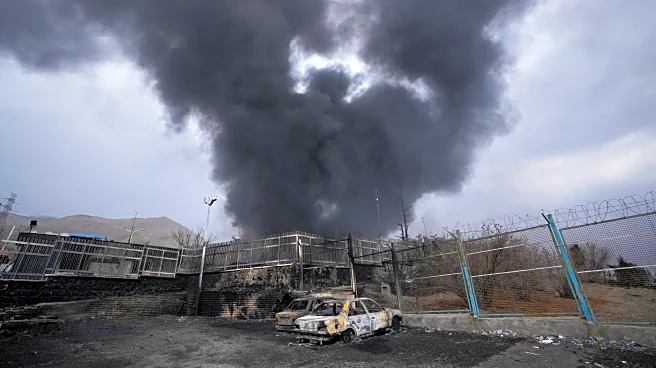
The ongoing conflict between the United States, Israel, and Iran has led to a significant increase in petrol prices worldwide. Since the attacks on Iran began on February 28, petrol prices have risen sharply, with the U.S. seeing a 20% increase from $2.94
to $3.58 per gallon. California has experienced prices exceeding $5 per gallon, the highest in over two years. The conflict has affected at least 95 countries, with Cambodia experiencing the highest increase at nearly 68%. The closure of the Strait of Hormuz, a critical passage for oil, has particularly impacted Asian countries like Japan and South Korea, which rely heavily on Gulf oil imports. Emergency measures have been enacted in these countries to stabilize energy markets.
Why It's Important?
The rise in petrol prices has significant implications for the global economy, affecting transportation costs and the price of goods. Higher oil prices can lead to increased inflation and potential stagflation, reminiscent of past oil shocks that resulted in global recessions. Countries with limited financial resources, such as Pakistan and Bangladesh, face severe challenges, including energy conservation measures and potential food shortages due to increased costs of fertilizers and transportation. The situation underscores the interconnectedness of global energy markets and the potential for geopolitical conflicts to disrupt economic stability.
What's Next?
As the conflict continues, further increases in petrol prices are expected, particularly in countries that adjust prices monthly. The Group of Seven finance ministers have already convened to discuss potential releases of strategic reserves to alleviate pressure on consumers. The ongoing situation may prompt additional emergency measures in affected countries and could lead to broader economic repercussions if the conflict persists.
Beyond the Headlines
The conflict highlights the vulnerability of global supply chains to geopolitical tensions, particularly in regions heavily dependent on oil imports. It also raises questions about energy security and the need for diversification of energy sources to mitigate the impact of such disruptions. The situation may accelerate discussions on renewable energy investments and the transition to more sustainable energy systems.