






What's Happening?
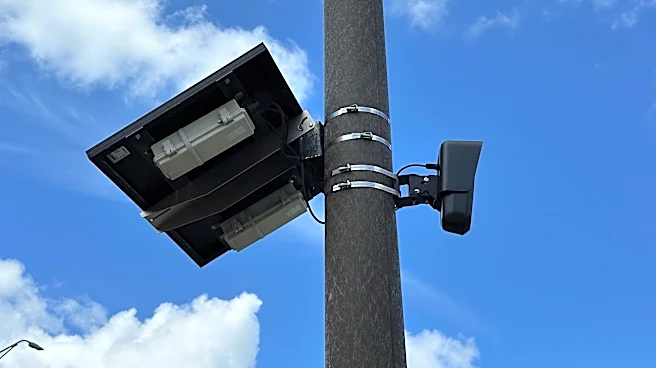
Texas Governor Greg Abbott recently discussed the state's response to the controversial use of Flock Safety's license plate-reading cameras during an interview on 'The Glenn Beck Program.' Abbott characterized the mass cancellation of county and municipal
contracts with Flock as a 'crackdown.' This development follows widespread public and governmental backlash against the AI-powered cameras, which scan and catalog license plates for crime prevention and resolution. Concerns have been raised regarding the company's data ownership policies, with accusations that Flock has misled police departments and local leaders. Additionally, instances of police officers allegedly abusing the technology to stalk individuals have fueled the controversy. Governor Abbott had previously paused all state funding for new Flock cameras late last month. He stated that Flock cameras are being 'reduced dramatically' and will be required to be used 'responsibly if they're used at all.' Despite these actions, the cameras remain in use in various Central Texas locations, including private entities like malls and HOAs, and by the Texas Department of Public Safety, which shares data with over 200 law enforcement agencies.
Why It's Important?
The ongoing debate and 'crackdown' on Flock cameras in Texas highlight a significant tension between public safety and individual privacy rights in the digital age. The technology's ability to collect and store vast amounts of license plate data raises critical questions about surveillance, data security, and potential misuse. The governor's intervention and the widespread contract cancellations indicate a growing public and political demand for greater accountability and transparency from technology providers operating in the public safety sector. This situation could set a precedent for how other states and municipalities approach the regulation of similar surveillance technologies. The concerns about data ownership and the sharing of information with numerous agencies, some outside of Texas, underscore the complex legal and ethical challenges associated with such systems. The pushback from communities and law enforcement agencies, such as Manor PD ending its program due to community concerns, demonstrates that the perceived benefits of these technologies may not outweigh the erosion of public trust when privacy is compromised.
What's Next?
The future of Flock cameras in Texas will likely involve continued scrutiny and potential legislative action. Governor Abbott's statements suggest a move towards stricter regulations and responsible usage guidelines for these devices. While some local law enforcement agencies, like the Round Rock Police Department, currently have no plans to cease using the cameras, the broader trend indicates a shift. The attorney and privacy advocate Mackenzie Rhine, from the Electronic Frontier Foundation in Austin, anticipates that state lawmakers will need to establish statewide guardrails for cities, counties, and police departments regarding license plate readers when the Legislature convenes next year. This could lead to more comprehensive laws governing data collection, storage, sharing, and accountability for surveillance technologies. It is also possible that other companies, learning from Flock's challenges, may emerge with similar technologies but with improved public relations and more transparent data policies, attempting to fill the market gap while addressing privacy concerns.
Beyond the Headlines
The controversy surrounding Flock cameras extends beyond immediate privacy concerns, touching upon deeper societal implications regarding the balance of power between technology companies, law enforcement, and citizens. The 'crackdown' reflects a growing public awareness and discomfort with pervasive surveillance, even when framed as a tool for public safety. The ethical dimension of data ownership, particularly when private companies collect and control data that can be used by government entities, is a critical aspect. The potential for 'mission creep,' where technology initially deployed for specific purposes is later expanded or misused, is also a significant concern. This situation underscores the need for robust public discourse and clear legal frameworks to govern the deployment of advanced surveillance technologies. The public's mistrust, as highlighted by the actions of departments like Manor PD, suggests that the effectiveness of such tools is ultimately tied to community acceptance and confidence in their ethical application. This could lead to a broader re-evaluation of how technology is integrated into policing and public life, emphasizing transparency and accountability.