







What's Happening?
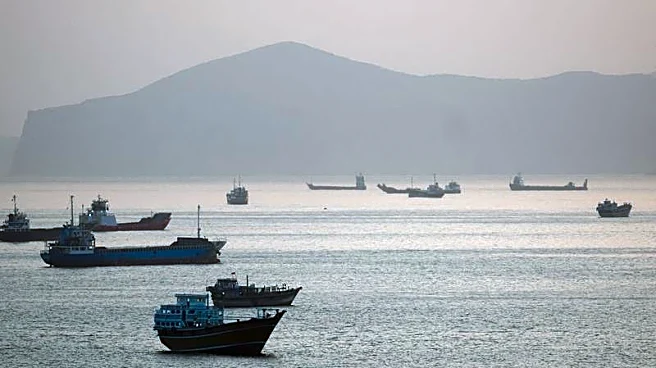
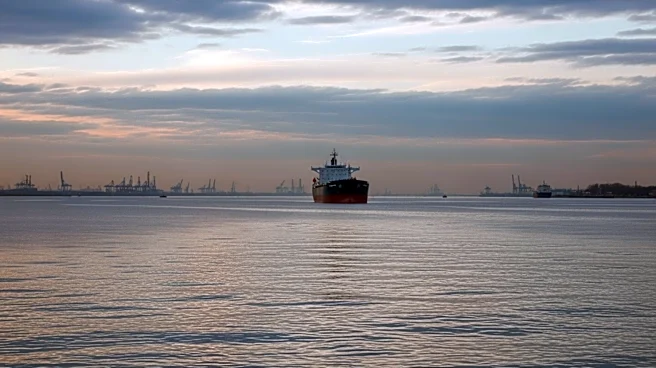
A $40 billion maritime reinsurance program, led by Chubb and announced by the U.S. International Development Finance Corporation, is currently stalled. The program, designed to provide coverage for commercial vessels navigating the Strait of Hormuz amid
the Iran conflict, is contingent upon the deployment of U.S. Navy convoys and escorts. Chubb CEO Evan Greenberg stated that the program cannot commence until these military conditions are met. The delay highlights the complexities of implementing insurance solutions in high-risk geopolitical environments, where military support is deemed necessary for operational viability.
Why It's Important?
The delay in the maritime reinsurance program underscores the challenges of securing commercial shipping routes in conflict zones. The program's reliance on U.S. Navy convoys reflects the heightened risk environment in the Strait of Hormuz, a critical chokepoint for global oil transportation. The inability to launch the program could impact shipping companies' risk management strategies and insurance costs, potentially affecting global trade flows. For the U.S., the situation highlights the strategic importance of military presence in ensuring the security of international shipping lanes, with implications for national security and economic stability.
What's Next?
The future of the maritime reinsurance program depends on the U.S. government's assessment of the risk environment and its willingness to deploy military resources. If the program proceeds, it could provide a model for insuring commercial activities in other high-risk regions. Stakeholders, including shipping companies and insurers, will need to monitor developments closely, as changes in military strategy or geopolitical conditions could alter the program's feasibility. The situation may also prompt discussions on alternative risk mitigation strategies for maritime operations in conflict zones.