







What's Happening?
Expected delays in U.S. Patriot missile deliveries are compelling NATO's Eastern Flank nations, particularly Poland, to fundamentally alter their air defense doctrines and industrial strategies. This shift moves away from solely relying on U.S. Foreign
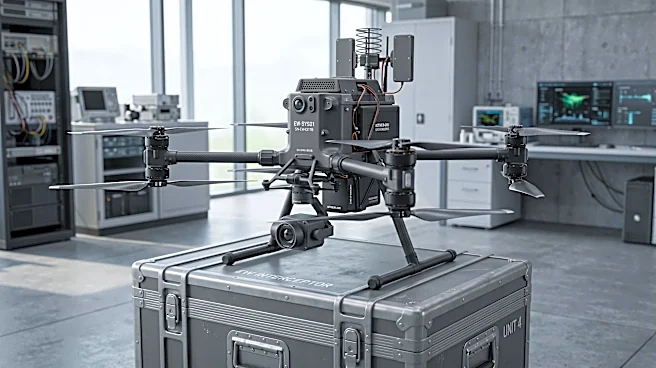
Military Sales (FMS) for off-the-shelf hardware. Poland's Defense Minister Władysław Kosiniak-Kamysz has issued an ultimatum to international defense companies, stating that future contracts will depend on establishing manufacturing and maintenance facilities within Europe. This announcement coincided with Norwegian defense group Kongsberg's $51 million investment to build a new counter-drone production plant in northern Poland. These developments signal the end of NATO's post-2022 emergency procurement phase, driven by backlogged U.S. production lines and the economic unsustainability of using expensive interceptors against low-cost drones. Poland, which allocates approximately 4.8% of its GDP to defense, is a major U.S. customer for advanced platforms but faces significant operational gaps due to these delays.
Why It's Important?
This strategic pivot by NATO's Eastern Flank has significant implications for U.S. defense market dominance and transatlantic security. The reliance on localized industrial co-production, particularly for counter-unmanned aerial systems (C-UAS), highlights a growing recognition that traditional FMS pipelines are insufficient for modern high-intensity warfare. The high cost-exchange ratio of using multi-million-dollar Patriot interceptors against inexpensive drones is fiscally unsustainable and leads to rapid magazine depletion. This forces allies to seek more cost-effective and locally produced solutions. For the U.S., this means a potential reduction in direct hardware sales if American defense primes do not adapt by establishing joint manufacturing and maintenance hubs on allied soil. The shift also underscores a broader move towards greater European defense industrial autonomy, potentially altering the balance of power within NATO's defense procurement landscape.
What's Next?
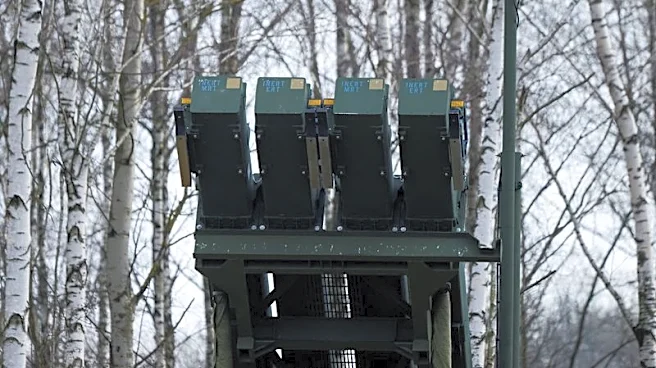
In the short term, allies are implementing ad-hoc solutions, such as Sweden deploying a Patriot unit to Poland to help shield the logistics hub in Rzeszów. However, the long-term strategy involves building sovereign supply chain depth for lower-tier air defense systems. Poland's SAN C-UAS program, a bilateral effort with Kongsberg, aims to integrate programmable 30mm cannon ammunition, low-cost guided rockets, and dedicated drone interceptors. This architecture is designed to absorb massed saturation attacks, preserving high-end Patriot and CAMM missiles for more sophisticated threats. For U.S. defense companies, the immediate next step is to streamline technology transfer bottlenecks and fast-track joint ventures to establish final assembly, interceptor energetics, and depot-level maintenance facilities in Eastern Europe to maintain their strategic foothold. NATO's military command will likely prioritize inverting the air defense pyramid, treating high-end systems as a reserve rather than a primary shield.
Beyond the Headlines
This shift reflects a deeper understanding of the operational realities of modern warfare, particularly the rapid evolution of counter-drone technology and the critical need for localized logistics and repair capabilities. Ukraine's experience has demonstrated that counter-drone warfare evolves on a six-week software and hardware cycle, making reliance on trans-Atlantic supply chains impractical for rapid adaptation. The move towards forward-deployed factories allows engineers to adapt systems directly alongside frontline units, ensuring relevance and effectiveness. Furthermore, the emphasis on local maintenance centers and domestic component manufacturing addresses the vulnerability of imported hardware becoming a 'hollow deterrent' after initial high-intensity combat. This development could foster greater defense industrial integration within Europe, potentially leading to a more resilient and self-sufficient European defense posture, while also challenging the traditional model of U.S. defense exports.