






What's Happening?
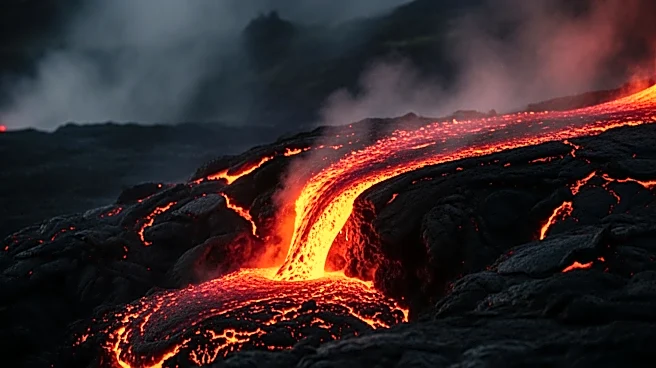
Hawaii's Kilauea volcano, one of the most active in the world, is on the verge of its 44th eruption, as forecasted by the United States Geological Survey (USGS). The eruption is expected to occur between April 6 and April 14, with precursory activity
already observed. Kilauea has been erupting episodically since December 23, 2024, and its eruptions are known for their spectacular lava fountains, which can shoot over 1,000 feet into the air. These natural displays draw numerous tourists to Hawai'i Volcanoes National Park. However, the eruptions also release hazardous gases and ash, posing significant health risks, particularly to individuals with heart or respiratory issues, infants, children, and pregnant women. The USGS is providing continuous updates through live webcams, allowing people to witness the event remotely.
Why It's Important?
The impending eruption of Kilauea is significant for both environmental and economic reasons. The volcano's eruptions are a major tourist attraction, contributing to Hawaii's economy by drawing visitors to the region. However, the health risks associated with the volcanic gases and ash cannot be overlooked, as they pose serious threats to vulnerable populations. The balance between promoting tourism and ensuring public safety is a critical issue for local authorities. Additionally, the eruption highlights the ongoing geological activity in the region, which requires continuous monitoring and preparedness to mitigate potential hazards.
What's Next?
As the eruption window approaches, the USGS and local authorities are likely to increase monitoring efforts and public advisories to ensure safety. Tourists and residents will need to stay informed about air quality and potential evacuation orders. The live webcams operated by the USGS will continue to provide real-time updates, allowing people worldwide to observe the eruption. Local businesses and tourism operators may also prepare for an influx of visitors, while health officials focus on mitigating the impact of volcanic emissions on public health.