

What's Happening?
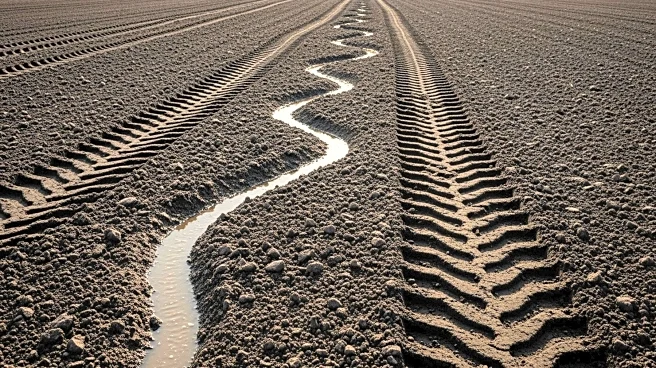
A recent study highlights the detrimental effects of common farming practices, such as deep plowing and the use of heavy machinery, on soil's hidden water network. Conducted by researchers from the Institute of Geology and Geophysics at the Chinese Academy
of Sciences, the study reveals that these practices damage the soil's ability to absorb and retain water, leaving crops vulnerable to flooding and drought. The research utilized fiber-optic cables to monitor water movement underground, a method termed 'agroseismology.' The findings indicate that soil structure is crucial for climate resilience, as it helps manage water during extreme weather events. The study emphasizes the need for sustainable soil management to maintain its natural buffering capacity.
Why It's Important?
The study underscores the critical role of soil structure in climate resilience, particularly as climate change increases the frequency of extreme weather events. Healthy soil acts as a sponge, absorbing and storing water, which is vital for agriculture. Disruption of this structure can lead to increased vulnerability of crops to weather extremes, affecting food security and agricultural productivity. The research suggests that sustainable soil management practices are essential to preserve soil's natural functions, which are crucial for supporting ecosystems and agricultural systems. This has significant implications for farmers, policymakers, and environmentalists focused on climate adaptation strategies.