



What's Happening?
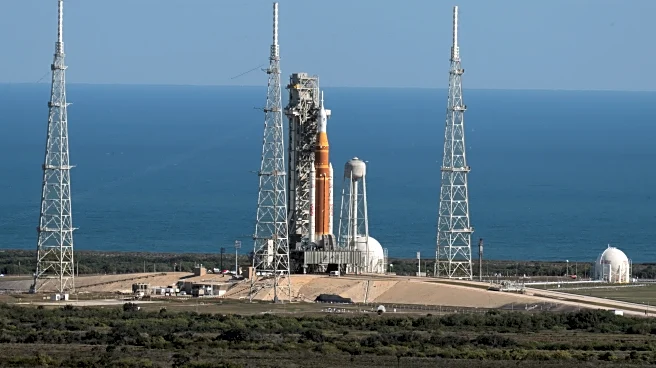
NASA's Artemis II mission has resumed the flow of liquid hydrogen into the core stage of the Space Launch System (SLS) rocket after addressing leak issues. The ground team had to halt operations twice due to leak rates at the tail service mast umbilical
interface exceeding limits. Engineers are now working to complete the filling process and manage hydrogen concentration levels during the core stage loading. Once the tank is full, the rocket will enter a replenish phase, reducing flow rates to control hydrogen concentration. Additionally, liquid oxygen flow into the upper stage has been reinitiated.
Why It's Important?
The successful management of liquid hydrogen operations is crucial for the Artemis II mission, which aims to advance human space exploration. Ensuring the integrity of the SLS rocket's fueling process is vital for the mission's success, as it directly impacts the safety and reliability of the launch. This development is a key step in preparing for future manned missions to the Moon and beyond, reinforcing NASA's commitment to advancing space exploration capabilities. The Artemis program is pivotal in establishing a sustainable human presence on the Moon, serving as a foundation for future Mars missions.