
What's Happening?
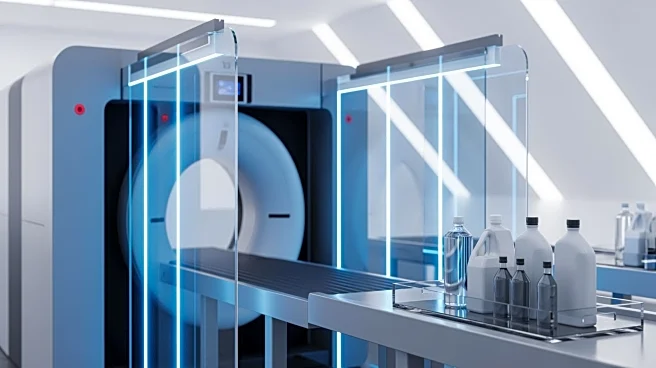
Heathrow Airport has completed the installation of advanced CT scanners across all its terminals, allowing passengers to carry liquid containers up to two liters in their luggage without the need for clear
plastic bags. This development marks Heathrow as the largest airport globally to fully implement this technology. The new scanners also enable passengers to leave electronics such as laptops in their bags during security checks. While Heathrow is the largest to adopt this change, other UK airports like Gatwick, Edinburgh, and Birmingham have already upgraded to similar systems. However, some airports are still awaiting approval from the Department for Transport to increase their liquid limits. The new scanners are designed to enhance security by providing clearer images of cabin bags, potentially increasing efficiency and maintaining safety standards.
Why It's Important?
The implementation of these high-tech scanners at Heathrow represents a significant shift in airport security protocols, potentially setting a new standard for airports worldwide. By allowing larger liquid containers, the airport aims to streamline the security process, reducing wait times and improving passenger experience. This change could influence other major airports to adopt similar technologies, leading to a broader transformation in airport security practices. The move also reflects a response to previous delays in updating security measures, which were initially promised by the UK government to be completed by 2022 but were postponed due to the pandemic. The adoption of this technology could have economic implications, potentially increasing passenger throughput and enhancing Heathrow's competitiveness as a major international hub.
What's Next?
As Heathrow leads the way with this new technology, other airports may follow suit, pending approval from relevant authorities. The Department for Transport's decision on whether to allow other airports to increase their liquid limits will be crucial. Additionally, the impact of these changes on passenger satisfaction and airport operations will likely be monitored closely. The broader adoption of such technology could prompt regulatory updates and further investments in airport infrastructure. Stakeholders, including airlines and airport operators, will need to adapt to these changes, potentially revising their operational procedures to align with the new security protocols.