








What's Happening?
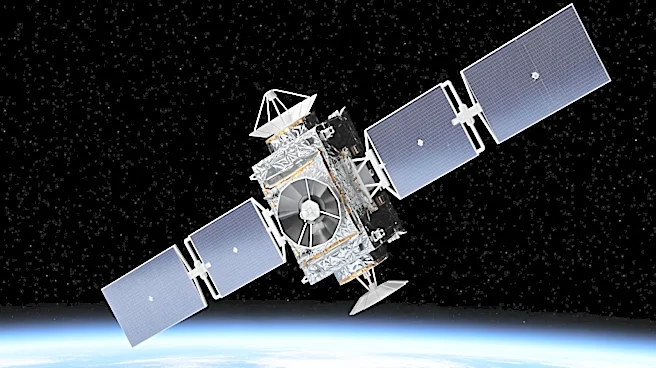
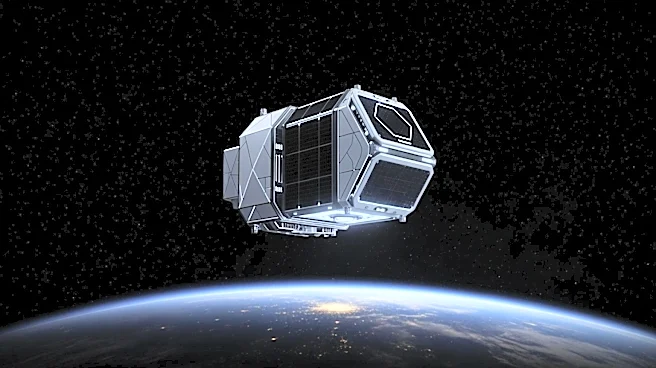
NASA, in collaboration with Katalyst Space Technologies and Northrop Grumman, has embarked on a mission to save the Swift observatory, a $500 million astronomy project at risk of re-entering Earth's atmosphere. The mission involves launching a small satellite,
developed by Katalyst, to attach to Swift and boost its orbit. This initiative, which began with a $30 million contract awarded to Katalyst in September, aims to extend the operational life of Swift, which has been crucial in detecting gamma-ray bursts since its launch in 2004. The satellite, named Link, will be transported by Northrop Grumman's Pegasus rocket to a location over the Pacific Ocean for launch.
Why It's Important?
The success of this mission is critical for the continuation of Swift's scientific contributions, particularly in the field of astrophysics. Swift's instruments are vital for identifying gamma-ray bursts, which are among the most powerful explosions in the universe. The mission also demonstrates the potential for rapid development and deployment of space technology, as it was completed in less than a year. This could set a precedent for future satellite rescue missions, potentially saving billions in space assets and extending the life of critical scientific instruments.
What's Next?
The launch is scheduled for June 27, with the satellite expected to reach Swift and perform the necessary orbital adjustments. If successful, this mission could pave the way for similar operations, offering a new method for maintaining and extending the life of aging satellites. The outcome will be closely watched by the space industry, as it could influence future strategies for satellite maintenance and rescue.