







What's Happening?
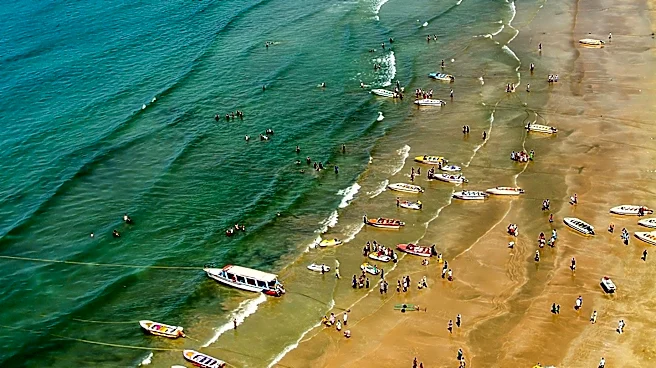
A group of tourists became stranded on an isolated Oregon beach after being cut off by rising tides while attempting to take a "dramatic" photo. The incident occurred at Lost Boy Beach in Tillamook County, a location that requires navigating a rocky path
and a sea cave to access. The tourists, unaware of the incoming tide, found themselves trapped. One of the individuals managed to make an emergency 911 call via satellite, as there was no cell service in the area. Authorities responded by flying a drone to locate the group, who had spelled out "SOS" with sticks. Fire crews from Netarts-Oceanside Fire District then conducted a rescue operation, braving large waves to reach the cold and wet tourists and guide them to safety.
Why It's Important?
This event underscores the critical importance of understanding and respecting natural environments, particularly coastal areas with dynamic tidal patterns. The incident highlights the dangers associated with seeking out remote or picturesque locations for photography without adequate knowledge of local conditions, such as tide schedules. It serves as a cautionary tale for tourists and adventurers, emphasizing that scenic beauty can quickly turn hazardous. The need for emergency services to deploy drones and navigate challenging conditions for rescue operations also points to the strain such incidents can place on local resources. Furthermore, the lack of cell service in remote areas highlights the necessity of alternative communication methods or preparedness for such contingencies.
What's Next?
Authorities, such as Tillamook Fire Chief Jeff McBrayer, hope this incident will encourage greater caution among visitors exploring Oregon's beaches. There may be increased public awareness campaigns about tide safety and the risks of isolated coastal areas. Local tourism boards and park services might consider enhancing signage or information dissemination regarding tidal patterns and safe exploration practices. For individuals, the event serves as a strong reminder to check tide charts, inform others of their plans, and carry appropriate safety gear, including satellite communication devices if venturing into areas without cell service. The incident could also prompt discussions about the accessibility and safety of popular, yet potentially dangerous, natural attractions.
Beyond the Headlines
The allure of capturing a "dramatic" photo, as mentioned in the source, speaks to a broader cultural phenomenon driven by social media, where individuals often prioritize unique visual content over personal safety. This incident is a stark reminder of the potential consequences when the pursuit of an aesthetic overlooks the inherent risks of nature. It raises questions about the responsibility of individuals to assess risks and the role of digital culture in influencing behavior in natural environments. The reliance on a satellite phone for the 911 call also highlights the digital divide in remote areas and the importance of robust emergency communication infrastructure. Ultimately, this event serves as a poignant illustration of the ongoing tension between human desire for exploration and documentation, and the unforgiving power of the natural world.