




What's Happening?
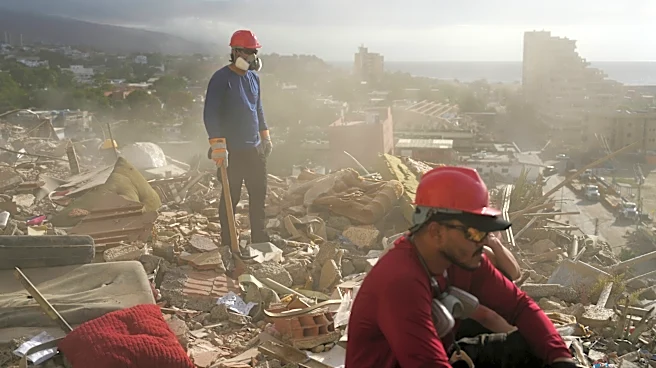
Following the devastating earthquakes in Venezuela, experts warn of significant environmental and health challenges. The earthquakes, which struck on June 24, resulted in over 5,000 deaths and left nearly 18,000 people homeless. The aftermath has seen
a rise in environmental hazards, with debris potentially contaminated with hazardous materials. Public health concerns are mounting as access to clean water and sanitation is compromised, increasing the risk of disease outbreaks. The Venezuelan government and international organizations are working to manage the crisis, but the situation remains dire.
Why It's Important?
The earthquakes have exacerbated existing vulnerabilities in Venezuela's infrastructure and public health systems, already weakened by years of economic turmoil. The environmental impact, including potential contamination of water sources and ecosystems, poses long-term risks to the region's recovery. The situation highlights the need for robust disaster response mechanisms and international support to address both immediate and future challenges. The crisis underscores the interconnectedness of environmental and public health issues in disaster-stricken areas.
What's Next?
Efforts are underway to manage debris and prevent further environmental damage. Authorities are prioritizing the restoration of safe water and sanitation services to mitigate health risks. International aid and expertise are crucial in supporting Venezuela's recovery and rebuilding efforts. The focus will also be on strengthening infrastructure to withstand future natural disasters and improving public health systems to prevent disease outbreaks.