




What's Happening?
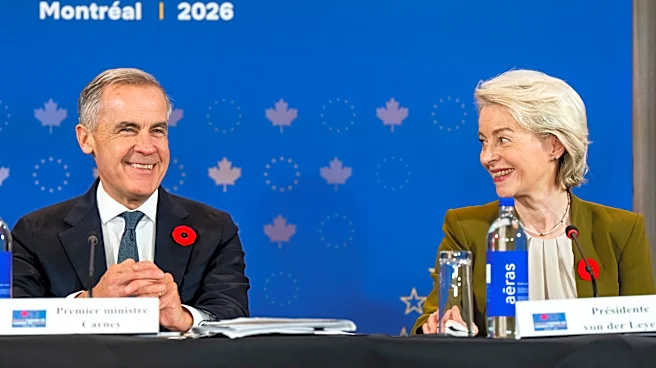
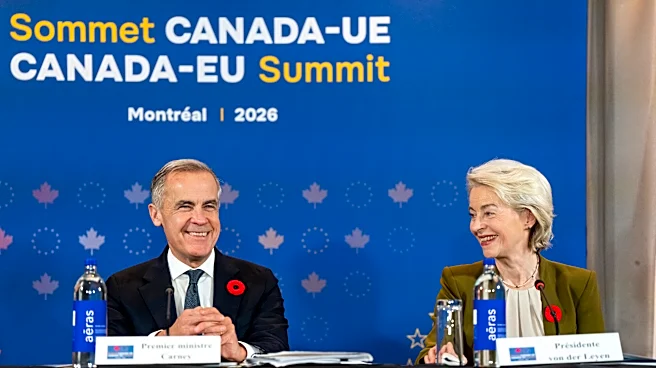
The European Union and Canada have announced a landmark strategic alliance aimed at deepening bilateral cooperation across critical minerals, artificial intelligence, and digital trade. This agreement, termed by both sides as the closest partnership between
the EU and a non-European state, was concluded at the EU-Canada Summit in Montreal. Key aspects of the accord include enabling the European Investment Bank to finance critical mineral projects in Canada, which will boost mining investment and help the EU diversify its supply chains. In the realm of artificial intelligence, both entities will expand cooperation in advanced supercomputing, granting Canadian researchers and enterprises access to European supercomputing infrastructure to advance secure AI technologies. Additionally, the agreement includes provisions for digital trade to streamline cross-border electronic transactions. Canada also reiterated its intention to participate in the €90-billion European loan program supporting Ukraine. This alliance builds upon the Comprehensive Economic and Trade Agreement (CETA) signed a decade prior, accelerating strategic alignment amidst evolving global trade and geopolitical landscapes.
Why It's Important?
This strategic alliance holds significant importance for global supply chains, technological advancement, and geopolitical stability. For the EU, it represents a crucial step in diversifying its supply of critical minerals, reducing reliance on single-source nations, and bolstering its clean energy transition and advanced technology sectors. Canada benefits from increased investment in its mining sector and enhanced access to European supercomputing infrastructure, fostering its growth in AI. The digital trade provisions aim to streamline cross-border transactions, potentially setting new standards for international digital commerce. The partnership also signals a broader effort to build a resilient economic coalition among like-minded international allies, including Japan, South Korea, and Australia, to navigate global market shifts. This collaboration could serve as a model for future international partnerships focused on shared economic and strategic interests, particularly in critical sectors like AI and clean energy.
What's Next?
Looking ahead, both the EU and Canada have expressed interest in expanding this strategic coordination framework to include other key international allies such as Japan, South Korea, and Australia. This expansion aims to build a broader economic coalition designed to be more resilient to international market shifts. Further discussions are also ongoing regarding Canada's participation in various EU initiatives, including the Erasmus student exchange program and the Galileo satellite navigation network. The implementation of the agreements, particularly the financing of critical mineral projects by the European Investment Bank and the expansion of AI cooperation, will be closely watched to assess the tangible benefits and operational efficiencies. The success of this alliance could influence future bilateral and multilateral agreements, potentially leading to a more interconnected and resilient global economic framework among democratic nations.
Beyond the Headlines
The deeper implications of this alliance extend to the evolving nature of international relations and economic security. By prioritizing critical minerals and AI, the EU and Canada are acknowledging the strategic importance of these sectors in national security and economic sovereignty. This move reflects a global trend where countries are seeking to secure essential resources and technological capabilities to reduce vulnerabilities to geopolitical pressures and supply chain disruptions. The emphasis on 'sovereign AI technologies' highlights concerns about data security, ethical AI development, and the control of advanced computing infrastructure. This partnership could also set a precedent for how non-EU nations can integrate more deeply with the bloc without full membership, potentially creating a new tier of international cooperation. The alliance underscores a shift towards 'minilateralism,' where smaller coalitions of countries form around shared interests, rather than relying solely on broader multilateral frameworks, to address complex global challenges.