
What's Happening?
The concept of an Arctic bypass is gaining traction as a potential alternative to traditional US-centric shipping networks. This development is driven by geopolitical tensions and the need for diversified
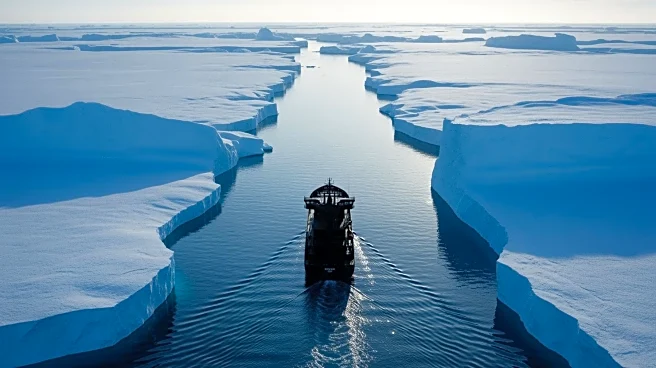
trade routes. The US National Security Strategy emphasizes securing access to critical goods and preventing rivals from controlling strategic assets. However, the reliance on chokepoint control and enforcement has led to concerns about 'coercive connectivity,' prompting some stakeholders to explore Arctic and Nordic routes as viable alternatives. These routes, though currently limited by seasonality and infrastructure, offer a hedge against disruptions in traditional maritime corridors.
Why It's Important?
The exploration of Arctic routes as alternatives to US-centric shipping networks reflects a shift in global trade dynamics. As geopolitical tensions and enforcement measures increase, stakeholders are seeking diversified routes to mitigate risks associated with chokepoints like the Suez Canal. The potential for Arctic routes to become more viable could impact global shipping patterns, insurance markets, and geopolitical alliances. This shift also highlights the strategic importance of maritime infrastructure and the need for resilience in global supply chains. The US's approach to maritime security and chokepoint control will play a crucial role in shaping the future of international trade routes.