



What's Happening?
U.S. Representative Jeff Van Drew announced in April that southern New Jersey would receive $99 million from the Army Corps for beach replenishment projects. This funding has facilitated the completion of significant sand replenishment efforts in key
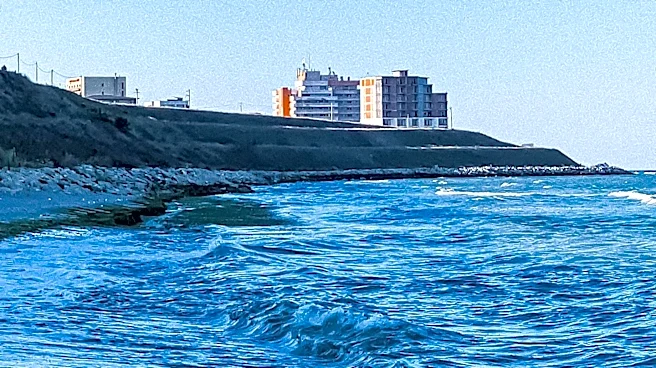
coastal communities, including Ocean City, Strathmere, Sea Isle City, Avalon, and Stone Harbor. The projects, which involved federal funding, contributions from the state Department of Environmental Protection, and local taxpayer support, aimed to restore and protect heavily eroded beaches. For instance, the Strathmere beach replenishment project, initially expected to last until September 7, was completed ahead of schedule. Similarly, Ocean City's $20 million beach replenishment project is nearing completion, with the city covering 9% of the cost. These efforts are crucial for maintaining the structural integrity of the coastline and protecting against ocean flooding, as highlighted by Ocean City Mayor Jay Gillian, who noted the replenishment's role in safeguarding the island from past storm damages.
Why It's Important?
The securing of $99 million for beach replenishment in southern New Jersey is vital for the region's environmental protection and economic stability. Coastal communities in New Jersey, particularly those along the Atlantic shore, are highly susceptible to erosion from storms and natural processes. These replenishment projects are essential for mitigating the impact of such erosion, protecting coastal infrastructure, and preserving the natural habitat. Economically, healthy beaches are a cornerstone of the tourism industry in these areas, attracting visitors and supporting local businesses. The funding ensures the continued viability of these tourist destinations, which are significant contributors to the state's economy. Furthermore, the projects demonstrate a collaborative effort between federal, state, and local entities to address critical environmental challenges, setting a precedent for future coastal management initiatives. The protection offered by these replenished beaches also reduces the long-term costs associated with storm damage and recovery.
What's Next?
With the current beach replenishment projects largely completed, the focus will likely shift to ongoing maintenance and long-term coastal resilience strategies. While the immediate erosion concerns have been addressed, the continuous nature of coastal erosion means that future replenishment efforts will be necessary. Local officials, such as Strathmere Mayor Curtis Corson, are exploring long-term solutions, including potential funding for hard structures to provide more permanent protection, although the effectiveness of such structures varies by location. The U.S. Army Corps of Engineers and the Department of Environmental Protection will likely continue to monitor the replenished beaches to assess their stability and the need for future interventions. Additionally, the success of these projects may influence future federal and state funding allocations for similar initiatives in other vulnerable coastal areas, potentially leading to more proactive and comprehensive coastal management policies.
Beyond the Headlines
Beyond the immediate benefit of restored beaches, these replenishment projects highlight the broader challenges and debates surrounding coastal management in the face of climate change and rising sea levels. While effective in the short term, beach replenishment is often viewed as a temporary solution, prompting discussions about its long-term sustainability and cost-effectiveness. Critics, like Eric Weeks from Strathmere, argue that these projects are expensive 'band-aids' that primarily benefit wealthy oceanfront property owners. This raises ethical questions about resource allocation and equitable protection for all residents. The need for more permanent solutions, such as hard structures, also brings environmental considerations, as these can alter natural coastal dynamics. The ongoing dialogue between temporary fixes and long-term, potentially more impactful, but also more controversial, engineering solutions will continue to shape coastal policy and resource management in the coming years.