





What's Happening?
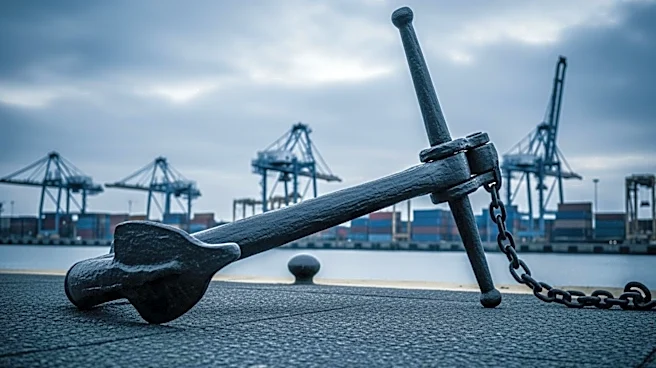
The Chinese lessee of Darwin Port, Landbridge Group, has initiated legal proceedings against Australia at the World Bank's International Centre for Settlement of Investor Disputes. The case challenges Australia's efforts to regain control of the port,
arguing that forced termination of the lease would violate the China-Australia free-trade agreement. This legal action is part of a broader pattern of resistance by China to relinquish control over strategic global infrastructure. The Darwin Port is a critical asset in China's Belt and Road Initiative, serving as a key maritime hub in northern Australia. The case follows similar international tensions, such as China's response to Panama's annulment of a Hong Kong company's port contracts.
Why It's Important?
The dispute over Darwin Port underscores the geopolitical tensions surrounding China's global infrastructure investments. Control of the port is strategically significant, providing China with maritime access to Asia and proximity to Australian and US military forces. The legal challenge reflects China's broader strategy to maintain influence over critical infrastructure worldwide, which has implications for national security and international relations. Australia's response to this challenge will be closely watched, as it could set a precedent for how countries manage foreign control of key assets. The outcome may influence global perceptions of China's Belt and Road Initiative and its impact on national sovereignty.
What's Next?
Australia faces a critical decision on whether to unilaterally terminate the lease and regain control of Darwin Port. This move would require careful consideration of potential economic and diplomatic repercussions. The Australian government may seek to collaborate with international security partners to ensure the port's management aligns with national security interests. The case could also prompt other countries to reevaluate their agreements with Chinese entities, potentially leading to a broader reassessment of China's role in global infrastructure. The resolution of this dispute will likely influence future international trade and investment policies.